Ensure hazardous waste compliance with our hazardous materials substances & wastes compliance guide. Master medical waste disposal and sharps compliance while learning how to discard medical waste. We simplify the disposal of clinic waste for Texas facilities.
If you run a clinic, lab, dental office, or hospital in Texas, you already know this: waste compliance isn’t “extra.” It’s part of patient care, staff safety, and protecting your reputation.
This guide breaks down hazardous waste compliance in Texas in plain language, so you can feel confident about medical waste disposal, sharps compliance, and the day-to-day reality of clinic waste disposal (without digging through regulations for hours).
At Biogenic Solutions, we provide much more than a cardboard box. You get local support, consistent pickup reliability, and a real person who knows Texas compliance. That way, you’re not stuck on hold with a national 1-800 number when you need an answer.
Understanding Hazardous Waste in Texas
In healthcare settings, “hazardous waste” can encompass several streams: chemicals, pharmaceuticals, and regulated medical waste. The key is to identify what you have before it ends up in the wrong container.
In Texas, regulated medical waste (sometimes referred to as “special waste”) typically includes:
- Microbiological waste: cultures, stocks, and discarded vaccines
- Pathological waste: tissues, organs, and body parts
- Bulk blood & body fluids: bulk blood, blood products, and certain body fluids
- Animal waste: from animals intentionally exposed to pathogens
- Sharps: needles, syringes, scalpels, lancets, and similar items
Why it matters: Each stream has its own rules for packaging, storage, treatment, and transport. When everything is “thrown together,” you increase risk and costs.
Waste Generators Classification
In Texas, your generator classification depends on the total volume of hazardous waste your facility produces in a single calendar month. More than a label, this classification dictates your specific legal responsibilities for medical waste management, reporting, and transportation.
| Classification | Hazardous Waste Volume | Waste Management Responsibilities |
| Large Quantity Generators (LQGs) | Over 1,000 kg/month | Expect the most oversight: planning requirements, reporting, and stronger documentation expectations. |
| Small Quantity Generators (SQGs) | 100–1,000 kg/month | You’ll still need strict segregation, proper storage practices, and clear records. |
| Conditionally Exempt Small Quantity Generators (CESQGs) | Under 100 kg/month | Smaller clinics often fall into this category, but you’re still responsible for proper treatment and disposal. |
How Your Category Impacts Compliance and Disposal
- Disposal & tracking: Higher-volume generators generally follow more rigorous tracking/manifest expectations. Even smaller generators must demonstrate that waste was properly treated and handled.
- Cost efficiency: When you know your category and waste mix, you can avoid overpaying for oversized service or paying extra because waste wasn’t segregated properly.
Texan Regulations on Hazardous Waste Compliance
Most Texas healthcare facilities interact with requirements overseen by the Texas Commission on Environmental Quality (TCEQ) and the Texas Department of State Health Services (DSHS).
These rules, primarily found in 30 TAC Chapter 326 and 25 TAC Chapter 1, dictate every aspect of medical waste management.
Practically speaking, compliance comes down to four steps you can control every day:
- Segregation
- Packaging, labeling, and storage
- Treatment, transport, and tracking
- Documentation
Packaging, Labeling, and Storage
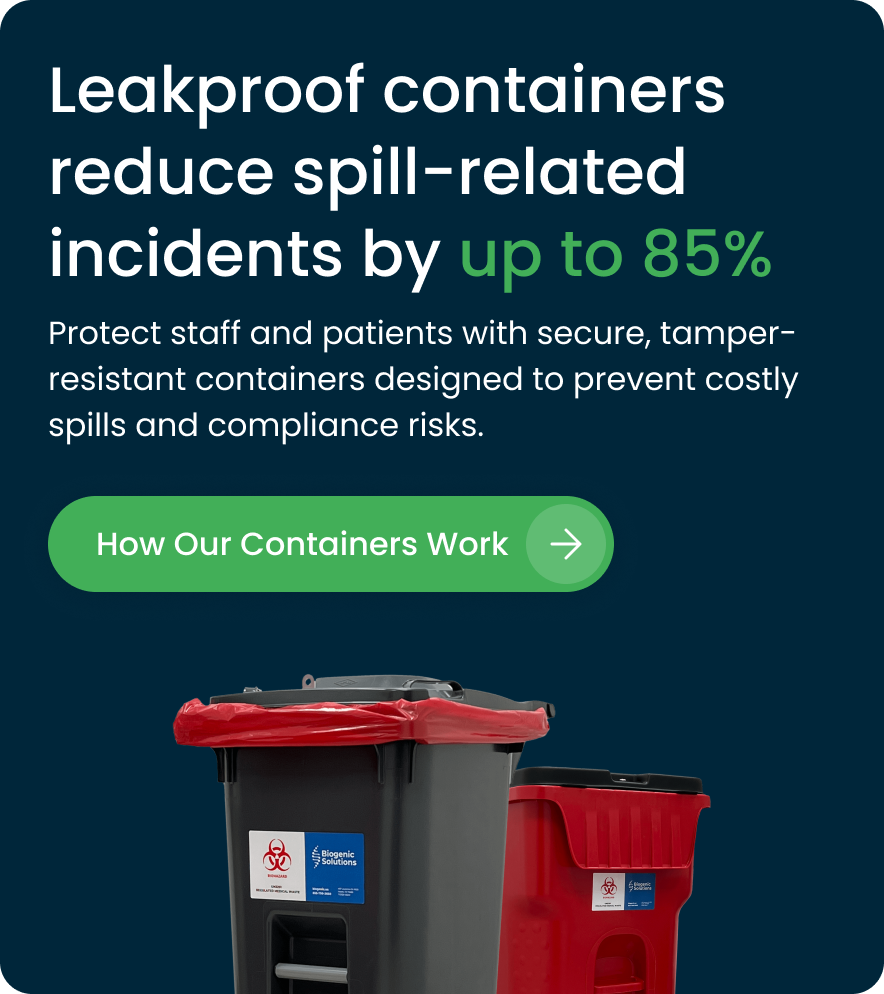
A good rule of thumb: if it can leak, puncture, or expose someone, your container needs to prevent that.
- Use rigid, leak-resistant containers
- Mark containers clearly with the biohazard symbol (and any required labeling)
- Store waste in a secure, controlled area (locked, ventilated, protected from public access)
- Stay inside storage limits (commonly 30 days, depending on waste and conditions)
Even if you’re a smaller generator, the basics don’t change: package it right, label it right, store it safely.
Treatment, Transport, and Tracking
Texas generally follows a “cradle-to-grave” mindset: you need accountability from the moment waste is generated to final treatment/disposal.
- Treatment commonly involves autoclaving (steam sterilization) or incineration, depending on waste type
- Use registered/authorized transporters with properly labeled, closed vehicles
- Keep records like manifests, treatment logs, and receipts (often at least 3 years)
In audits or inspections, proper paperwork will serve as proof of your facility’s compliance.
Learn more: How Hospitals Can Strengthen Regulated Medical Waste Audits
Sharps, Pharmaceuticals, and Special Waste Essentials
Sharps Compliance
Managing sharps waste is where mistakes get expensive, and fast.
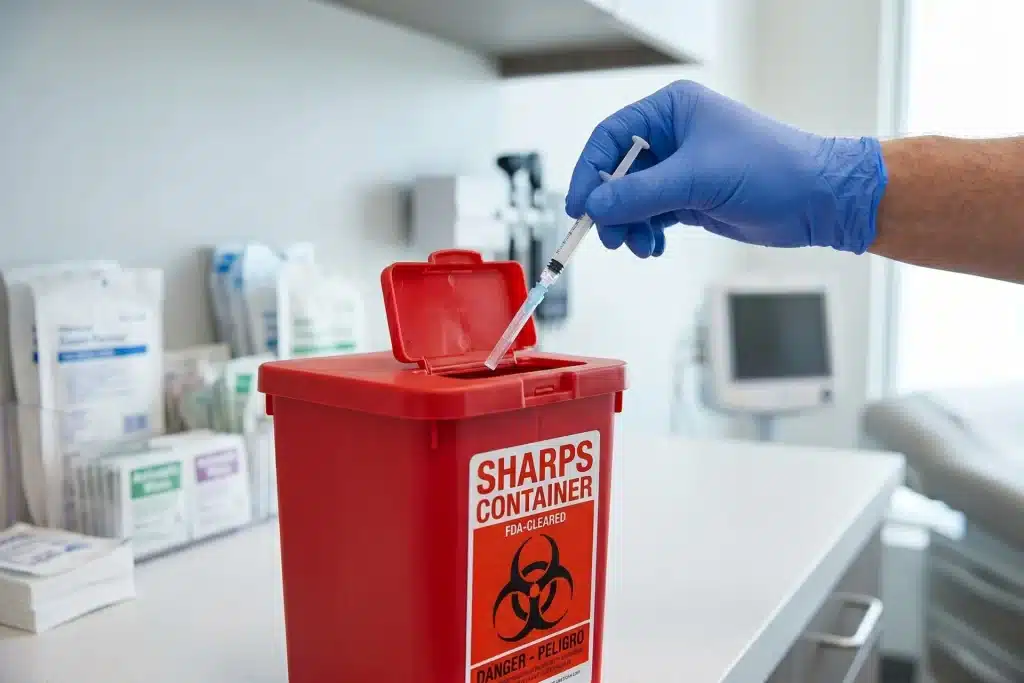
- Put sharps directly into a puncture-resistant sharps container at the point of use
- Never place loose sharps in red bags or regular trash
- Don’t “overfill” containers; replace before the fill line
Following these steps isn’t only for compliance. It’s staff safety and OSHA exposure prevention.
Pharmaceuticals and Special Waste
Expired or unused meds shouldn’t be treated like general trash. Separate pharmaceutical waste from other streams and follow a compliant disposal route to prevent contamination of water or unnecessary risk.
Operations: Documentation and Sustainability
If you want to make compliance easier, build a routine:
- Label containers when they’re first used
- Keep a simple system for pickup records and manifests
- Train staff in short bursts and conduct annual training
If you’re trying to reduce costs, start with the biggest win: waste segregation. When non-hazardous materials end up in regulated containers, you pay regulated disposal rates for regular trash.
Learn more: Regulated Medical Waste Disposal Methods: Pros, Cons, and Use Cases
Texas Medical Waste Compliance Checklist
Here’s the “keep it on your clipboard” version:
| Focus Area | Your Compliance Action Item | Why It Matters |
| Waste Segregation | Separate infectious materials and pharmaceutical waste from non-hazardous waste. | Reduces operational costs and prevents cross-contamination. |
| Sharps Safety | Dispose of needles and sharps in a leak-proof, puncture-resistant container. | Prevents needlestick injuries and ensures OSHA compliance. |
| Labeling | Clearly label every hazardous waste container at the point of origin. | Ensures safe handling and prevents accidental disease transmission. |
| Documentation | Maintain accurate records of all waste disposal and treated waste. | Serves as legal proof of hazardous waste compliance during audits. |
| Staff Training | Provide regular education on laboratory procedures and OSHA-compliant solutions. | Empowers your team to handle infectious agents safely. |
| Local Partnership | Move beyond “just a box” by partnering with Biogenic Solutions. | Provides personalized service without generic 1-800 hold times. |
The Impact of Non-Compliance: Risks and Penalties
Non-compliance isn’t just “a fine.” It can create:
- Budget shocks. You may face hefty fines and legal action, disrupting your facility’s budget and operational costs.
- More oversight: You might receive greater oversight from agencies such as the TCEQ. This can complicate your daily operations and increase the administrative burden.
- Reputational damage: Being penalized can lead to the loss of your community’s and patients’ trust, resulting in long-term damage to your practice’s brand that you cannot afford.
FAQs About Medical Waste Management
Hazardous waste is identified by its ignitability, corrosivity, reactivity, and toxicity.
Use a licensed provider with approved treatment methods (often autoclaving or incineration) and clear documentation so you have proof it was handled correctly.
Sharps include needles, syringes, lancets, and scalpel blades, which must always be stored in a leak-proof, puncture-resistant container.
While some pharmacies have programs, most health care facilities are required by regulations to use professional medical waste disposal services for compliant collection.
Key Takeaways
- Compliance is about safety, documentation, and consistency, not guesswork
- Adhere to state regulations issued by the TCEQ and federal regulations, such as RCRA
- Segregation lowers risk and prevents overspending
- Sharps containers at the point of use reduce needlestick risk dramatically
- Records keep you audit-ready and reduce stress
- A local partner helps you avoid the biggest operational headache: missed pickups and slow support
Building a Safer, Compliant, and Sustainable Future
If you’re tired of unclear pricing, missed pickups, and chasing support through a national call center, Biogenic Solutions is built differently:
- Transparent pricing: volume-based, predictable, no surprises
- Reliability: on time, every time; no missed pickups
- Personalized service: direct access to local experts who understand Texas facilities
Take the stress out of medical waste management and book your free consultation today.