Annual bloodborne pathogens training keeps your healthcare team compliant, prepared, and protected. Learn the OSHA-required steps, core safety practices, and documentation essentials that reduce exposure risks and strengthen daily operations across clinics, labs, and patient-care environments.
Annual bloodborne pathogens (BBP) training is a core requirement for OSHA 1910.1030 compliance and a critical part of maintaining a safe and prepared clinical environment. This annual training equips your healthcare team with the universal precautions, PPE standards, and exposure-response procedures needed to reduce risk and protect both staff and patients.
For hospitals, clinics, laboratories, and home-care providers, BBP training is more than another task on the compliance checklist. It’s a foundational element of safe operations and a key safeguard against preventable exposure incidents.
As a practice manager or safety officer, you need clear guidance on what OSHA requires, what practical BBP training must include, and how to maintain accurate documentation that supports full compliance and peace of mind.
Why Yearly OSHA Training Refresher Matters
A comprehensive BBP course prepares your healthcare workers for those high-risk moments where fast, confident decision-making matters. Exposure risks appear in seconds during a hectic shift: an overfilled sharps bin, a rushed specimen handoff, or an unexpected splash. This annual training refreshes procedures, ensuring your employees know how to respond to exposures and protect both your staff and patients.
OSHA requires regular BBP instruction for anyone at risk of exposure to human blood, other bodily fluids, or other potentially infectious materials, but the value goes far beyond compliance.
Pro Tip: Make sure the instruction is role-specific. The job duties for lab workers differ wildly from those of a home-care nurse, and tailoring the content improves both relevance and retention.
Key Bloodborne Pathogens Training Components
An OSHA-compliant bloodborne pathogens course must cover these foundational elements:
- Understanding pathogens and transmission. Staff must identify pathogens like HIV, HBV, and HCV, and how transmissions occur, to avoid exposure.
- Regulatory requirements & PPE. Training must demonstrate how to use, don/doff, and safely dispose of all required personal protective equipment.
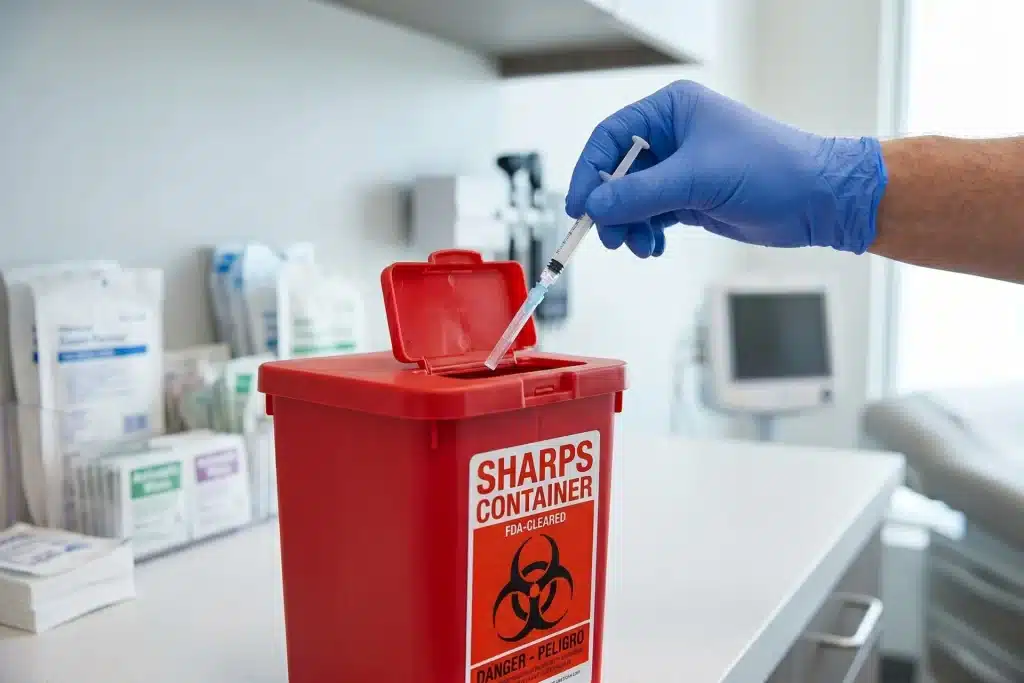
- Sharps safety & engineering controls. Detailed procedures for handling contaminated needles, sharps disposal, and proper use of safety-engineered equipment.
- Exposure response procedures. A clear, practiced routine is key: immediate first aid, exposure incident reporting, post-exposure evaluation, and medical follow-up.
- The Exposure Control Plan (ECP). Staff must be familiar with the location and contents of the facility’s plan, including information on Hepatitis B vaccination.
Together, these components create safer daily habits and reduce incidents across workplace settings. If you need an OSHA-compliant bloodborne pathogens course, we’ve got one.
Meeting OSHA Bloodborne Pathogens Compliance Requirements
Under OSHA standards, you must provide bloodborne pathogens training online or in-person to all at-risk employees during paid work hours and at no cost to them. To remain compliant, you must:
- Maintain training and official certificate records for a minimum of three years
- Track attendance and successful completion
- Keep a current and easily accessible ECP
- Update training content regularly to reflect new procedures or equipment
When your healthcare team meets all these requirements, you ensure your staff, patients, and all those who handle your medical waste remain safe from contaminants. Keep staff safe every day with an effective bloodborne pathogens training course designed specifically for your operations.

Image Source: AI Generated
How to Maximize Engagement and Keep Safety Training Sharp
Even essential training can feel repetitive. To maximize retention and participation, incorporate variety:
- Interactive formats: Use quizzes, real-world scenarios, and short videos instead of static lectures.
- Hands-on and active learning: Integrate demonstrations and group discussions.
- Fresh feedback loop: Collect feedback after each session to refine the material and ensure it stays relevant.
One-Hour BBP Spot-Audit Prep Checklist
Is your facility ready for spot checks? Review this manager-friendly audit walkthrough to ensure your program stands up to internal review or OSHA inspection.
| Time Slot | Action Item | Check |
| 0–10 Minutes | ECP Review |
|
| 10–25 Minutes | Training & Documentation Check |
|
| 25–40 Minutes | Work Area & Equipment Review |
|
| 40–55 Minutes | Staff Knowledge Spot-Check |
|
| 55–60 Minutes | Finalize & Update |
|
Key Takeaways
- Prioritize standard precautions and PPE use, train staff on job risks and ECP, and emphasize quick reporting to reduce needlestick injuries.
- OSHA Standard 1910.1030 requires that all at-risk employees complete this training annually, during paid working hours.
- Enhance compliance and retention with diverse formats, while keeping training logs and records for at least three years.
Building a Safe, Compliant Workplace for Your Staff
Annual bloodborne pathogens training protects the people who make healthcare work. For staff seeking formal proof of course completion, obtaining a bloodborne pathogens training certificate online provides a record of competency.
Compliant, high-quality courses ensure your organization stays safe and inspection-ready. At Biogenic Solutions, we’re ready when you are. Get compliant today.