Elevate your hospital medical waste program by strengthening your audits of RMW. Master source segregation of sharps and pharmaceutical waste with continuous staff instruction to ensure compliance, reduce risk of injury, and drive cost-effective disposal for your health care facilities.
For healthcare managers overseeing hospital medical waste programs, a robust audit is more than a requirement: it’s your most powerful tool for ensuring safety, maintaining compliance, and, yes, saving your facility money. A thorough medical waste audit sheds light on inefficiencies, such as non-regulated trash contaminating costly biohazardous waste containers.
Biogenic Solutions knows you’re looking for improvements in medical waste management that reduce operational costs, so let’s walk through four powerful ways you can strengthen your audits of regulated medical waste and turn a complex task into a clear, cost-effective strategy.
1. Ensure Proper Segregation: The First Line Fix
The moment medical waste is created is pivotal in any hospital medical waste program. Poor segregation at the point of origin drives unnecessary costs because it forces your facility to pay high disposal rates for general, non-hazardous trash. Effective waste segregation is the foundation of smart medical waste management.
- Audit for accuracy: Don’t just check bin fill levels. Check what’s inside the bins. Conduct “snapshot” audits in high-generation areas, like operating rooms or laboratories.
- Check: Are staff improperly mixing non-hazardous solid waste with containers designated for infectious waste?
- Ensure that sharps, such as needles and syringes, are properly disposed of in designated sharps containers to minimize the risk of needlestick injuries.
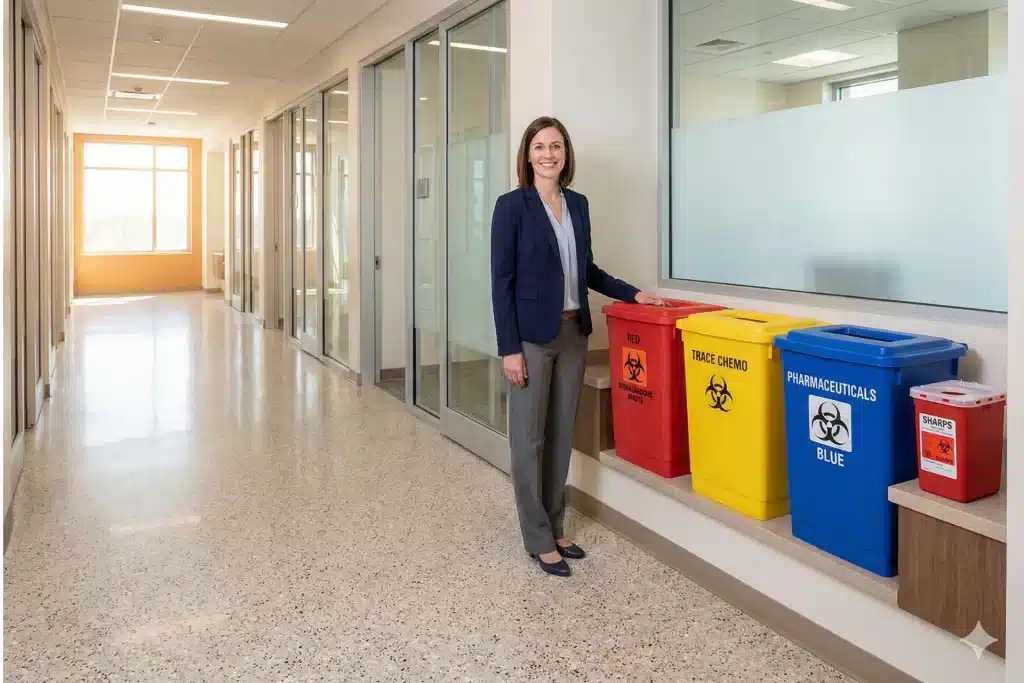
- Color-Code Consistency: Verify that all containers are the right color, clearly labeled, and sized appropriately.
- Using smaller regulated medical waste (RMW) containers that may contain blood or other body fluids in patient rooms makes it less likely they’ll be used as general trash cans. Proper handling and segregation minimize the risk of injury and contamination.
2. Implement Intentional Staff Instruction
Even the clearest labeling fails if your staff isn’t continuously trained. You deal with multiple teams, including nurses, doctors, and environmental health care workers, so training must be consistent and reinforced. This is where a true compliance partner in waste management shines, offering more than just a pickup service.
- Make Training Routine: Integrate RMW segregation instruction into annual training requirements, not just during onboarding.
- Provide OSHA-compliant training, including online courses, to keep your team up-to-date on proper pharmaceutical waste and sharps disposal.
- Education must also cover the correct treatment and handling of both infectious waste and hazardous waste, including expired chemicals and other substances.
- Visual Validation: Ensure clear signage is posted directly above and on the lids of containers. Use visuals, especially in laboratories, to eliminate confusion on specific instruments and materials.
- When audits reveal deficiencies, retrain immediately, using the audit findings as a learning moment. This focus on infection control protects both patients and healthcare workers from unnecessary exposure to risk.
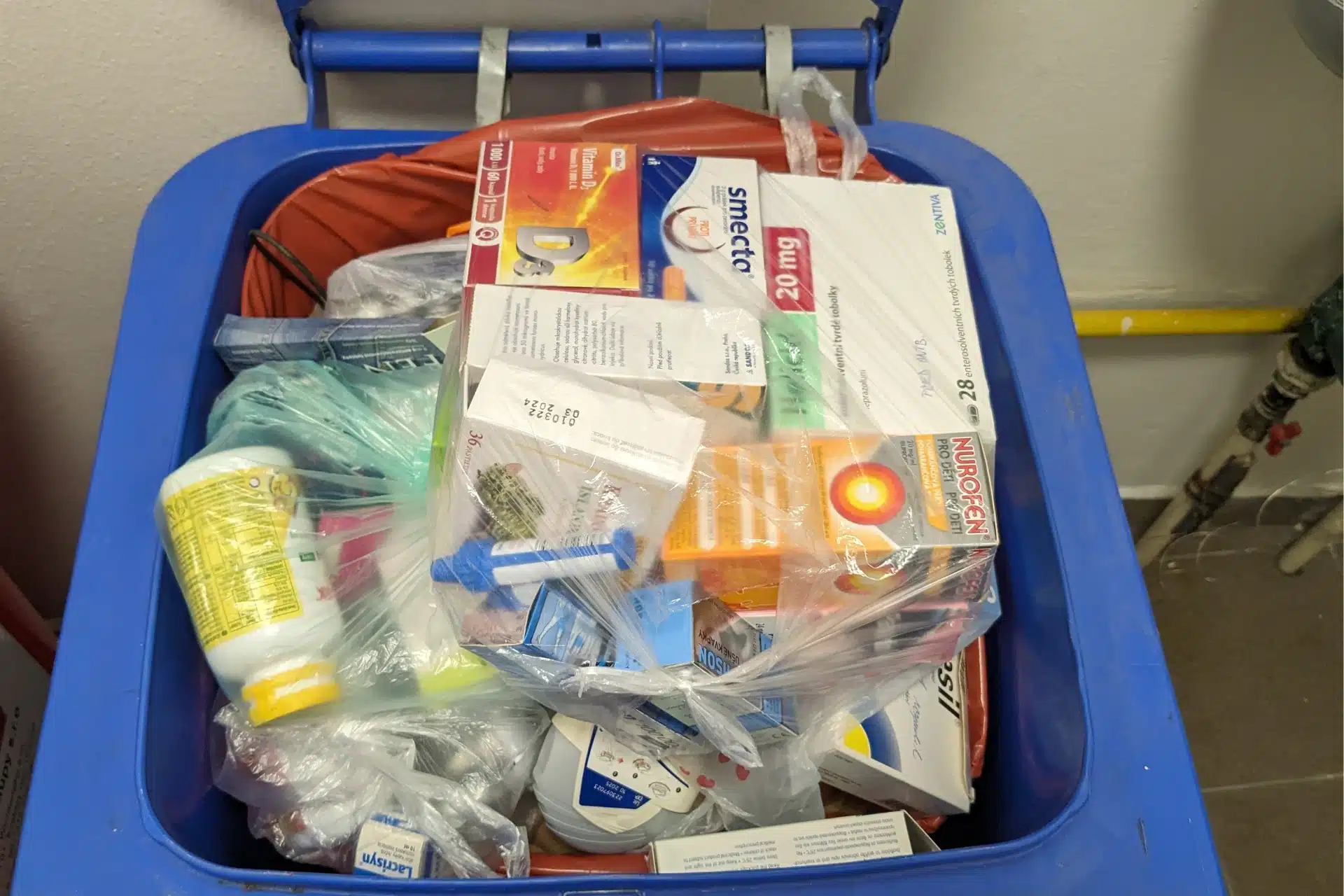
Image Source: Shutterstock
3. Quantify and Customize Container Care
A great hospital medical waste program isn’t one-size-fits-all. You need a customized plan that reflects your health care facilities’ specific volume and waste generated. This is vital for infection control and minimizing the risk of disease transmission.
- Measure and Manage: Use your audit to measure the amount, nature, and composition of medical waste generated in different functional areas. The goal is to track regulated medical waste generation by department and hold department heads responsible for their disposal costs. Look closely at the volume of sharps, contaminated materials, and pharmaceutical waste.
- Optimize Pickup Planning: If you’re using a large waste management provider, you may be experiencing missed pickups or long hold times. Your audit data should inform your pickup schedule. Proper storage of regulated medical waste is essential for environmental safety and to protect the general public.
4. Select an Expert Compliance Partner
The most efficient health care facilities don’t go it alone. An external medical waste management partner brings an objective, expert eye to your system. They can help you with pre-audit preparation and the final analysis.
- Leverage External Expertise: A specialized provider can help you assess and document your medical waste streams, verifying proper classification and packaging. They ensure your audit aligns with specific regulatory guidelines and regulations in your area, preventing potential legal issues and fines.
- Demand Transparent Pricing: Make sure your provider uses transparent, consistent, volume-based pricing without surprises. They are your compliance partner, ensuring you have the safe, reliable, and tailored waste services you need for the proper disposal and treatment of all types of medical waste.
By implementing these audit strategies, you are actively streamlining your operations, reducing waste, and safeguarding your staff and patients, not just checking a compliance box.
FAQs About Hospital Medical Waste Programs
Sharps are primarily managed as infectious waste, requiring puncture-proof containers to prevent needlestick injury. Pharmaceutical waste has complex rules based on whether it is hazardous waste (e.g., chemicals) or non-hazardous, and requires specialized manifesting and disposal.
While state regulations vary, most experts recommend conducting internal medical waste audits at least quarterly to track segregation accuracy, container usage, and staff compliance. Regular auditing minimizes risk and helps maintain proper management.
Focus on rigorous waste segregation to avoid paying regulated medical waste rates for common solid waste. Implement robust, recurrent staff training, and partner with a provider offering transparent, volume-based pricing to control costs.
Absolutely. Properly segregating general trash from infectious waste and sharps is the single greatest opportunity for cost reduction in medical waste management. Over-classifying waste can unnecessarily increase your disposal costs.
Key Takeaways
- Auditing at the source prevents non-hazardous materials from mixing with costly biohazardous waste.
- Continuous, facility-wide training for all health care workers is essential for maintaining proper segregation protocols.
- Customizing container size and pickup schedules based on audited wastes generated reduces storage challenges and costs.
- A reliable waste management partner provides expert guidance on regulations and treatment, ensuring pricing is transparent.
- Tracking regulated medical waste volume by department holds teams responsible for their waste stream and cost control.
- Correctly isolating hazardous waste and specific materials like expired chemicals minimizes environmental safety concerns.
The Strategic Value of a Dedicated Compliance Partner
Stop paying for compliance errors, inefficiencies, and wasted space in your containers. With Biogenic Solutions, your hospital medical waste program runs with absolute precision, not guesswork.
Our customized, volume-based solutions are designed to meet your facility’s exact needs, ensuring consistent pickups, regulatory confidence, and predictable costs every time.
Contact Biogenic Solutions today for a transparent quote and transform your medical waste program from a compliance burden into a reliable, efficient operation.