Protect your facility by mastering the Bloodborne Pathogen Standard. Our guide helps you manage occupational exposure through an effective exposure control plan and bloodborne pathogens training. Ensure your clinic stays compliant, safe, and cost-effective with Biogenic Solution’s personalized solutions.
Whether you manage a fast-paced dental clinic or a long-term care facility, the bloodborne pathogen standard applies to any employee with “reasonably anticipated” occupational exposure to human blood or other potentially infectious materials (OPIM).
In dental settings, for example, compliance is vital for managing sharps and body fluid exposure during procedures. For long-term care, the focus often shifts to safe sharps disposal and regulated medical waste handling to protect both staff and hospital and clinic patients.
In just 60 minutes, you can assess and enhance your facility’s readiness to minimize employee exposure and meet OSHA standards while building a culture of occupational safety.
The 4 Pillars of Your Exposure Control Plan (ECP)
An exposure control plan (ECP) is a written “playbook” that explains how a facility protects its staff from harmful substances they might encounter on the job, such as viruses, bacteria, or toxic chemicals.
The document should outline the use of safer medical devices and procedures, and must be reviewed and updated annually. Think of it as a roadmap designed to keep you safe from invisible and/or dangerous hazards.
For OSHA compliance, an ECP must detail the following elements:
- Exposure determination: You must maintain a written list of job classifications and tasks where occupational exposure occurs within your specific facility.
- Personal Protective Equipment (PPE): You must provide and maintain appropriate PPE, such as surgical or examination gloves, gowns, and face shields, for your employees.
- Post-exposure protocol: You need clear procedures for a post-exposure evaluation following needlesticks or mucous membrane contact to ensure your staff receive proper care.
- Hepatitis B vaccination: Ensuring the vaccine series is offered is required, even if an employee initially declines hepatitis vaccination and later changes their mind.
Documentation and Competency Checks
Documenting your actions officializes your compliance with the bloodborne pathogen standard to minimize exposure.
- Bloodborne pathogens training: Your records must include the subject matter covered, training dates, and the healthcare professional responsible for the session.
- Sharps Injury Log: Your facility must maintain a log detailing any incidents to help identify patterns and prevent future sharps-related injuries.
- Universal precautions: Ensure your facility utilizes universal precautions to treat all human body fluids as if they are infectious.
- Work practice controls: Implement work practice controls and physical containment devices to further minimize occupational exposure.
- Competency checks: Conduct interactive training sessions with Q&A to ensure your staff thoroughly understands the protocols.
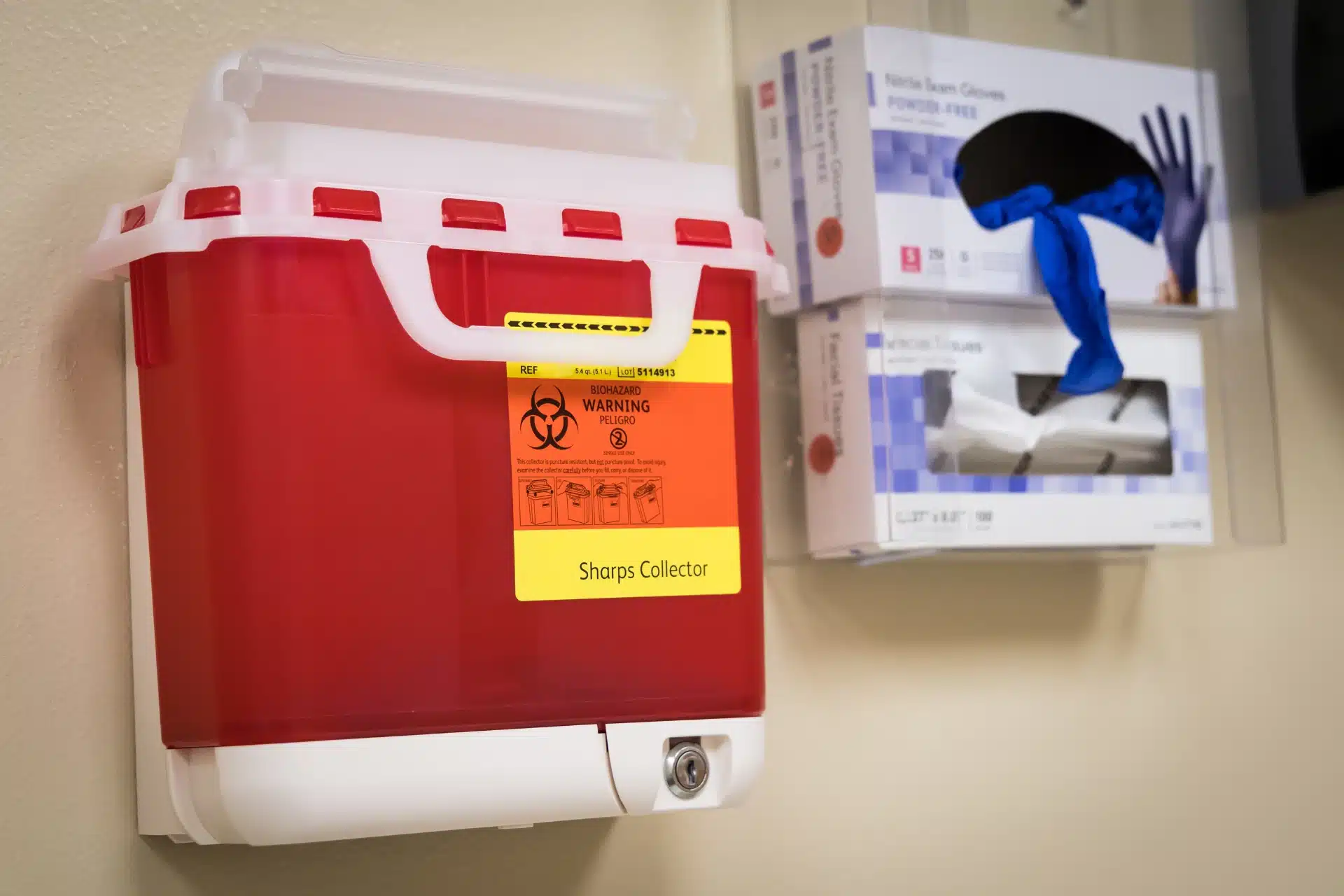
Image Source: Shutterstock
Rapid Clinic Assessment: Are You Compliant?
To ensure compliance, clinics need a quick self-assessment. Here’s a step-by-step guide:
- Review your current Exposure Control Plan (ECP). Is it up to date and site-specific? Use OSHA’s model ECP for reference.
- Check if all employees have completed bloodborne pathogen training. This is crucial to minimize exposure risks to certain human body fluids. Assess whether documentation for these sessions is complete and accessible.
- Verify that PPE is readily available and correctly used. Conduct regular audits to assess their effectiveness.
Maintain standards by continuously evaluating your ECP. Make immediate adjustments as needed to keep your staff safe and prevent OSHA violations.
Biogenic Solution’s Compliance Quick-Check
Use this mini-checklist to see if your facility is currently meeting OSHA standards:
| Compliance Requirement | Key Evaluation Question | Status |
| Written ECP | Is your Exposure Control Plan updated for the current year and site-specific to your location? | |
| Annual Training | Has every occupationally exposed staff member completed bloodborne pathogens training in the last 12 months? | |
| Safer Devices | Have you evaluated and implemented safer medical devices (e.g., sharps disposal systems) where appropriate? | |
| PPE Availability | Is your PPE inventory current, adequate, and easily accessible to all relevant staff? |
How Biogenic Solutions Training Course Maps to OSHA Requirements
Your facility doesn’t have to navigate these regulations alone. Biogenic Solution’s online OSHA-compliant courses are built to satisfy bloodborne pathogens certification requirements, mapping directly to healthcare “quick-start” needs.
By adopting our bloodborne pathogens course, you can streamline staff training and monitor your compliance status in real-time.
Key Takeaways
- Adhere to a site-specific bloodborne pathogen standard protocol to safeguard your staff from occupational exposure.
- Employees must complete bloodborne pathogens training every 12 months to meet OSHA requirements.
- Your facility must have a written ECP that identifies risks and outlines protective measures.
- Provide appropriate PPE and work practice controls to minimize employee exposure.
- Keep accurate training records and sharps injury logs to ensure your facility passes regulatory audits.
Building a Culture of Safety and Readiness
Prioritizing the bloodborne pathogen standard protects your staff and strengthens your facility’s reputation. True readiness requires proactive assessment and a partner who ensures you never face missed pickups or long hold times.
At Biogenic Solutions, we’re dedicated to being your compliance partner in medical waste management. We invite you to reach out for a personalized, local service experience that offers transparent, volume-based pricing without surprises.
Ready to simplify your compliance? Contact Biogenic Solutions today to learn how we can help you save with customized solutions catered to your facility’s specific needs.