Healthcare facilities must use FDA-cleared sharps containers made from rigid, heavy-duty plastic with a secure lid and biohazard labeling. Choose the right container size, schedule pickup when the container is three-quarters full, and partner with a licensed sharps disposal provider to maintain OSHA compliance.
Managing sharps waste is one of the most regulated responsibilities in any clinical setting.
Whether you’re running a physician’s office, dental clinic, dialysis center, or long-term care facility, improper sharps disposal can put your staff at risk, trigger costly violations, and create liability you don’t want.
This guide walks you through every step of the process, from identifying sharps waste to scheduling compliant pickup, so your facility stays protected.
What Counts as Sharps Waste?
Before you can dispose of sharps correctly, your team needs to know what qualifies as sharps.
Sharps waste includes any device with a sharp point or edge that could puncture or cut skin; they should be placed in a container immediately after use.
Common sharps waste items include:
- Hypodermic needles and syringes
- Lancets used for blood glucose testing
- Pen needles and insulin pens or other auto-injectors
- Scalpel blades and surgical instruments
- Infusion sets and IV tubing with needles attached
- Broken glass from medical vials or laboratory settings
In Texas, sharps waste is classified as regulated medical waste under the Texas Commission on Environmental Quality (TCEQ) and must be managed accordingly. If your facility generates any of these materials, you’re required to handle them through a licensed sharps disposal pickup program.
Choosing the Right Sharps Disposal Container
Not all sharps containers are created equal. Selecting the right one for your facility is a compliance decision, not just a practical one.
FDA Requirements for Sharps Containers
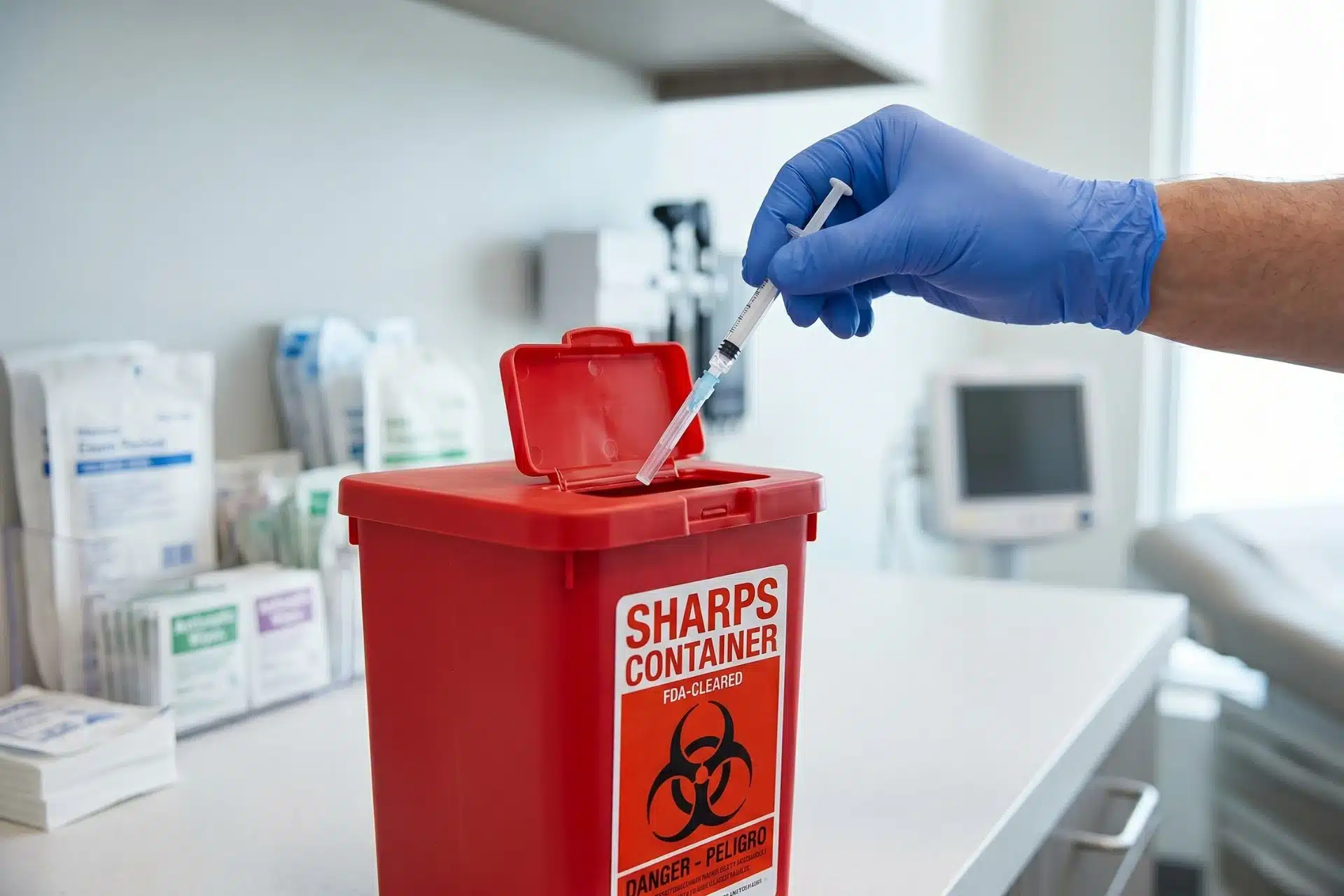
FDA-cleared sharps containers are made from rigid, heavy-duty plastic and must meet specific safety standards before use in a clinical setting. The FDA evaluates the safety and effectiveness of these containers to ensure they protect both staff and the public.
A compliant medical sharps container must be:
- Puncture-resistant on all sides
- Leak-proof at the bottom and sides
- Clearly labeled with the biohazard symbol
- Closable with a tight-fitting lid to prevent spills
- Available in the size appropriate for your facility’s volume
FDA-cleared containers are available in various sizes; containers used for pharmacy drop-off programs can’t exceed one gallon. Each container has a marked line indicating when to dispose of it. Improvised containers, such as coffee tins or cardboard boxes, are never acceptable under any regulations, regardless of the circumstances.
Matching Container Size to Your Facility’s Volume
Container size should match the volume of sharps your facility generates, not the size of your storage space. Using a container that’s too small leads to overfilling, which is one of the most common compliance violations.
A general guide by facility type:
- Small containers (1 to 2 quarts): Exam rooms, individual workstations, point-of-care areas
- Mid-size containers (2 to 8 gallons): Dental operatories, procedure rooms, outpatient labs
- Large containers (12-gallon and up): High-volume surgical facilities, dialysis centers, hospital departments
A sharps disposal provider should help assess your usage patterns and recommend the right fit.
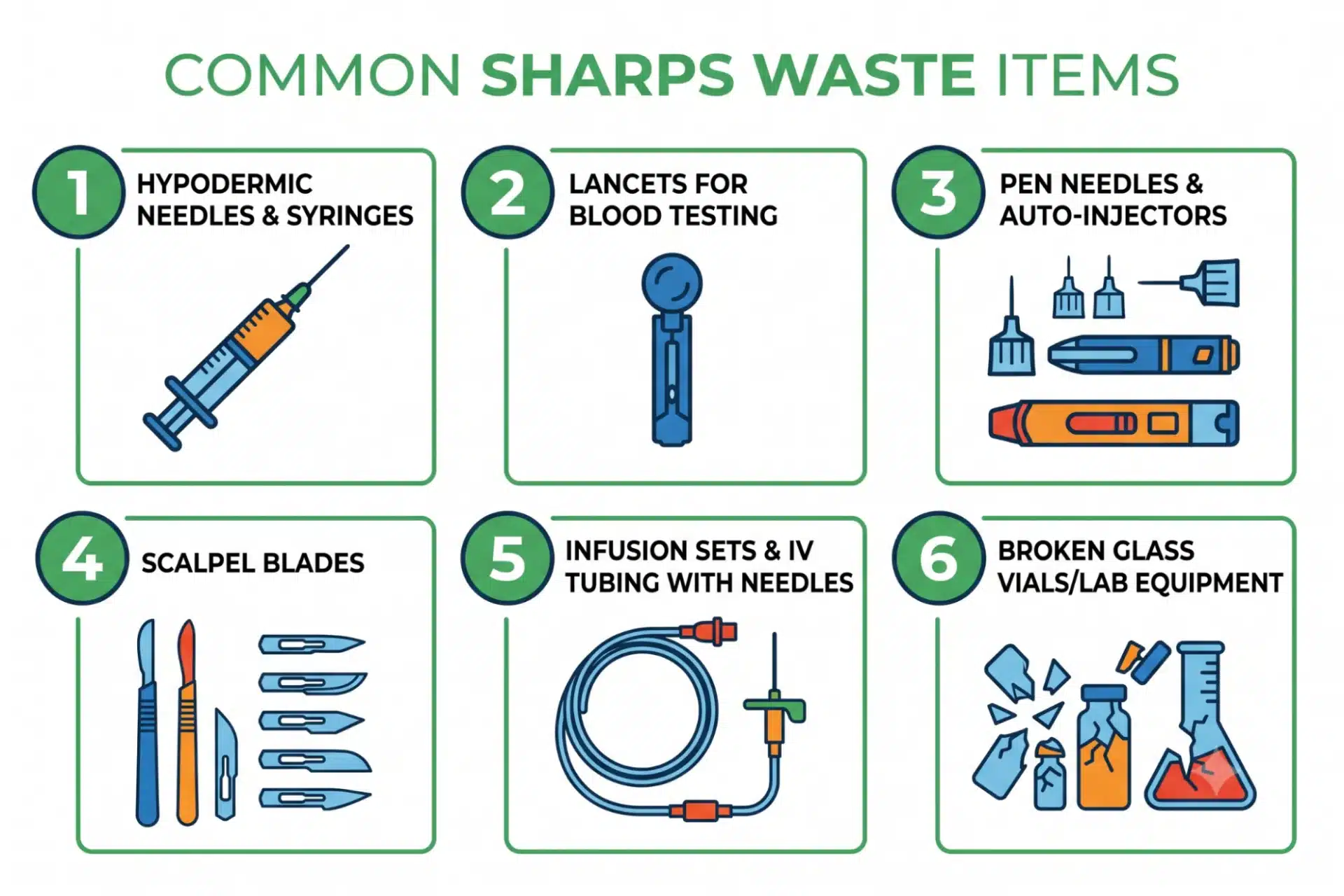
Image Source: Gemini 2026
When to Schedule a Sharps Pickup
Timing your pickup correctly is just as important as using the right container. The fill line on a sharps container isn’t a suggestion.
It’s the compliance threshold.
The Three-Quarters Rule: Do Not Overfill
OSHA and the CDC both advise that sharps containers should never be filled beyond three-quarters of capacity. Overfilled sharps containers pose a high risk of needlestick injury when staff attempt to close the lid or move the container. Once a container reaches the fill line, close and seal it, then remove it from service immediately. Never compress or push used sharps down to make more room.
Properly sealed containers mustn’t be placed in regular household trash or recycling bins. In environments catering to younger patients or animals, such as pediatric or veterinary offices, in-use containers must be stored in secure areas inaccessible to children and pets.
Setting a Pickup Schedule That Works
Reactive pickup, waiting until containers are full before calling, creates compliance risk. A scheduled, recurring pickup program removes the guesswork and ensures containers never sit overfull.
When building your schedule, factor in:
- The volume of sharps procedures performed each week
- Seasonal fluctuations, such as flu shot clinics or vaccination drives
- Storage capacity and any TCEQ storage time limits that apply to your facility
A reliable sharps container disposal partner will work with you to set a schedule that fits your facility’s actual workflow, not a generic timetable built for someone else.
OSHA Requirements for Sharps Management
OSHA’s Bloodborne Pathogens Standard (29 CFR 1910.1030) sets out specific requirements for any facility where workers may be exposed to blood or other potentially infectious materials. Non-compliance can result in significant fines and, more importantly, preventable staff injuries.
Key OSHA requirements for sharps disposal include:
- Containers must be accessible at the point of use, so staff don’t need to carry used needles across the room to find a disposal container
- Containers must be maintained upright throughout use to prevent spills
- Used sharps must never be recapped by hand using a two-handed technique, or bent, or manipulated in any way that could cause injury
- Training on safe sharps handling must be provided to all at-risk staff annually
OSHA also requires that your facility maintain a Sharps Injury Log to track any needlestick incidents. Facilities with fewer than 10 employees may have modified requirements, but the core sharps handling rules apply across all state jurisdictions.
Learn More: Vet Clinic Sharps: A Texas & Oklahoma Checklist for Safe Disposal
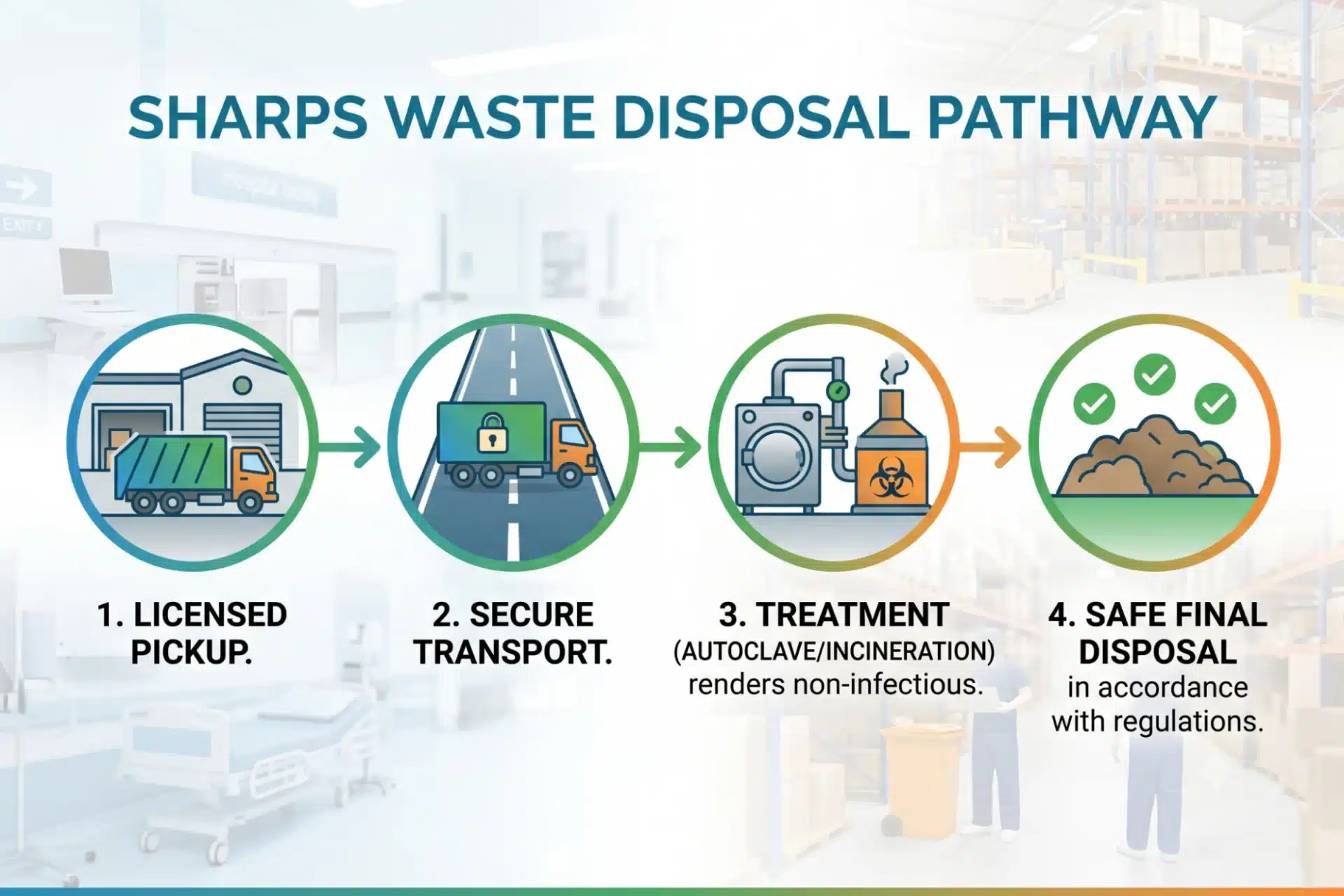
Image Source: Gemini 2026
Common Sharps Compliance Mistakes to Avoid
Even well-run facilities make avoidable errors. These are the ones that show up most often during audits and inspections.
- Overfilling containers: The most frequent violation. Implement a visual check system so overfull containers are never missed.
- Using non-compliant containers: Improvised containers are never acceptable. Only use FDA-cleared sharps containers that meet rigorous safety standards.
- Improper storage location: Containers must be stored in a secure, designated area inaccessible to patients, visitors, and unauthorized personnel. Check your state requirements for specific storage rules.
- Delayed disposal: Sharps waste can’t sit indefinitely. Know your facility’s permitted storage timeframes under Texas regulations.
- Inadequate staff training: OSHA compliance isn’t a one-time orientation item. Staff need annual refreshers, and new hires should be trained before they handle sharps.
FAQs About Sharps Containers
Sharps containers must be disposed of through a licensed medical waste provider. Do not place them in regular trash or recycling. Drop-off locations often include hospitals and pharmacies. However, clinical facilities should use a scheduled pickup service to meet their volume and compliance needs.
Dispose of the sharps container when it reaches the three-quarters-full line. Filling beyond that point increases the risk of needlestick injuries and is a common OSHA compliance violation. Each FDA-cleared container has a clearly marked line to make this easy to identify.
After pickup, sharps waste is transported by a licensed carrier to a regulated treatment facility where it’s autoclaved or incinerated to render it non-infectious before final disposal in accordance with state and federal requirements.
Key Takeaways
- FDA-cleared sharps containers must be made from rigid, heavy-duty plastic with a puncture-resistant body, leak-proof seal, and tight-fitting lid.
- Never fill a sharps container beyond three-quarters capacity; overfilling is one of the most common OSHA compliance violations.
- Place used sharps in a container immediately after use and store containers at the point of care, not across the room.
- Scheduled sharps-disposal pickups reduce compliance risk more effectively than reactive, call-when-full arrangements.
- Sealed sharps containers must never go in regular trash or recycling; they must be disposed of through a licensed medical waste provider.
- OSHA requires annual sharps handling training for all at-risk staff, plus a Sharps Injury Log to track any needlestick incidents.
Partner With a Provider Who Knows Compliance
Sharps compliance isn’t something your facility should manage through guesswork or one-size-fits-all solutions. Biogenic Solutions offers personalized sharps container disposal services tailored to your facility’s volume, schedule, and regulatory requirements, with consistent pricing and a team you can actually reach.
Whether you need compliant containers, scheduled pickup, or OSHA-aligned waste documentation, we can build a program that fits your workflow.
Contact Biogenic Solutions today to get a customized plan for your facility.