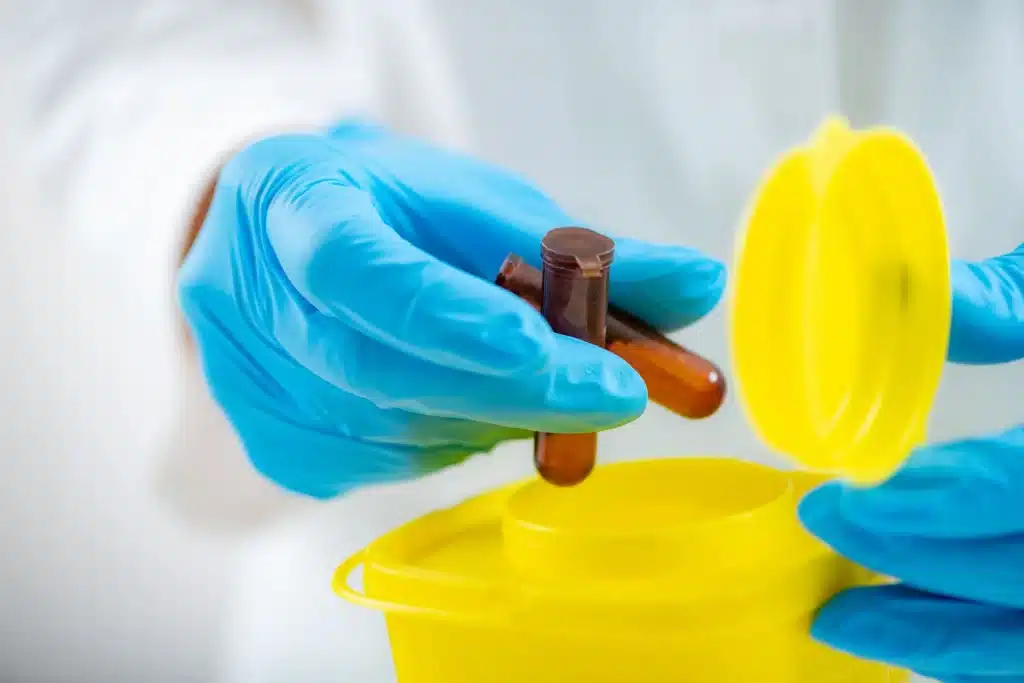
The disposal of pharmaceuticals means identifying hazardous and non-hazardous drugs, segregating them at the point of generation, storing them in labeled containers, and scheduling pickups through a licensed provider who documents each step to meet DEA and EPA compliance requirements.
Those handling pharmaceutical waste in a healthcare facility already know the pressure: one mislabeled container, one missed pickup, one record that doesn’t add up, and you’re explaining a violation instead of passing your next inspection.
Disposing of pharmaceuticals in Texas and Oklahoma is governed by DEA, EPA, and state regulations. In this guide, we break down what counts as pharmaceutical waste, the DEA and EPA rules behind it, and what a compliant pickup from local medical waste disposal providers like Biogenic Solutions actually looks like.
What Counts as Pharmaceutical Waste in a Healthcare Facility?
Pharmaceutical waste is any drug your facility can no longer use as intended. Each category below carries its own disposal requirements.
- Prescription medications: pharmaceuticals such as antibiotics that require a doctor’s prescription and have either gone unused or expired.
- Over-the-counter medications: common medicines and personal care products, like pain relievers, that count as pharmaceutical waste once discarded.
- Controlled substances: regulated drugs like opioids or sedatives that fall under DEA oversight and need extra security.
- Hazardous drugs: certain chemotherapy agents and other medications that meet the EPA’s hazardous waste criteria.
- Partially used vials: leftover doses from injections or IV medications that can’t be returned to inventory.
- Expired or contaminated medications: drugs past their use date or exposed to contamination that are no longer safe to administer.
The disposal method depends on classification. Dumping expired drugs or hazardous agents down the drain or trash can trigger penalties and environmental harm.
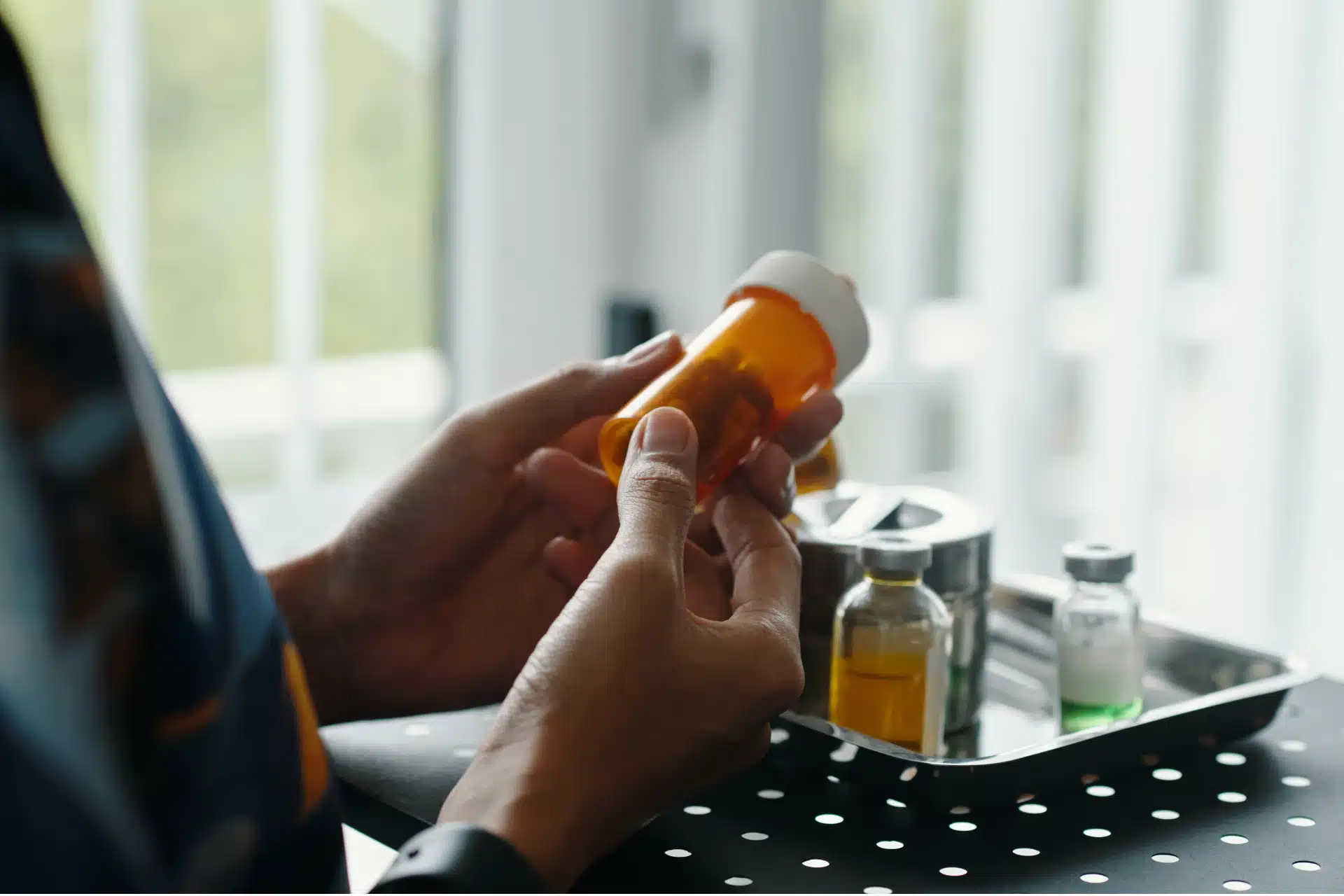
Image Source: Canva
What are Hazardous Waste Pharmaceuticals?
Hazardous waste pharmaceuticals are drugs the Environmental Protection Agency (EPA) classifies as ignitable, reactive, corrosive, or toxic. Each classification changes how you’re required to dispose of it.
- Ignitable: catches fire easily, often because of alcohol or other flammable solvents.
- Reactive: becomes unstable and can react dangerously with air, water, or other chemicals.
- Corrosive: damages skin, eyes, or even the container itself from extreme pH levels.
- Toxic: causes harm if it’s ingested, inhaled, or absorbed.
Segregate these hazardous wastes from regular trash and regulated medical waste (RMWs) at the point of generation to prevent cross-contamination, and a documentation gap an inspector will catch.
If you’re unsure whether a drug counts as hazardous pharmaceutical waste or RMW, the distinction changes, which rules apply, and the EPA’s hazardous waste listings break down the F, K, P, and U lists used to make that call.
DEA and EPA Requirements for Pharmaceutical Waste
Two federal agencies oversee the disposal of pharmaceuticals: the DEA governs controlled substances, and the EPA governs hazardous drugs.
- The DEA requires controlled substances to stay secured until destroyed through an authorized disposal method, like mail-back envelopes, with accurate records kept at every stage. Facilities handling opioids follow this.
- The EPA regulates hazardous pharmaceutical waste under the Resource Conservation and Recovery Act (RCRA). You’re required to store it in closed, labeled containers and track it through final disposal.
Throwing away hazardous-waste pharmaceuticals outright can release dioxins into the environment, and is banned. Consult the EPA’s guidance for what your facility needs to do, including rules for reverse distributors handling returns that can’t be resold.
How to Separate and Store Pharmaceutical Waste for Collection
Separate hazardous pharmaceutical waste at the point of generation using labeled, color-coded containers. How you sort now determines how easily it’s picked up later.
- Choose containers for the type of waste you have: hazardous, non-hazardous, or controlled substances, including solids, liquids, and aerosolized products like inhalers.
- Mark every container clearly across departments, so staff never have to guess which bin a drug belongs in.
- Keep controlled substances in a restricted-access area to avoid diversion or theft.
- Teach workers which medications go in which containers, and revisit if your waste streams change.
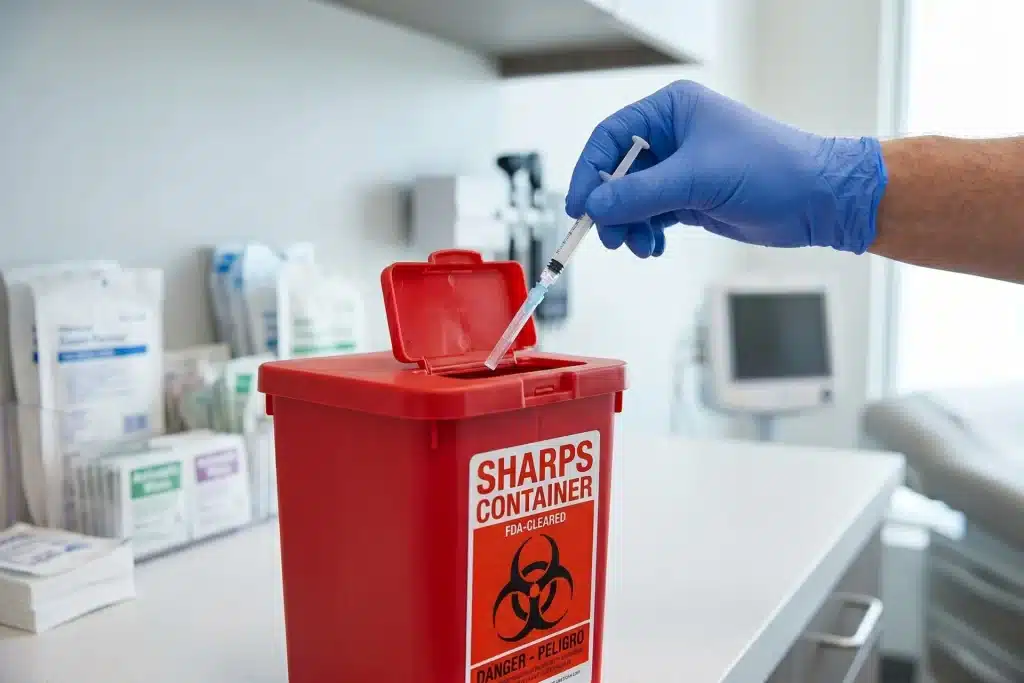
Use clearly labeled, reusable medical waste bins and sharps containers built specifically for this segregation.
Clear sorting eliminates contamination and keeps your facility inspection-ready. It also supports compliance with OSHA’s Hazard Communication Standard, which requires employees to understand chemical hazards in the workplace.
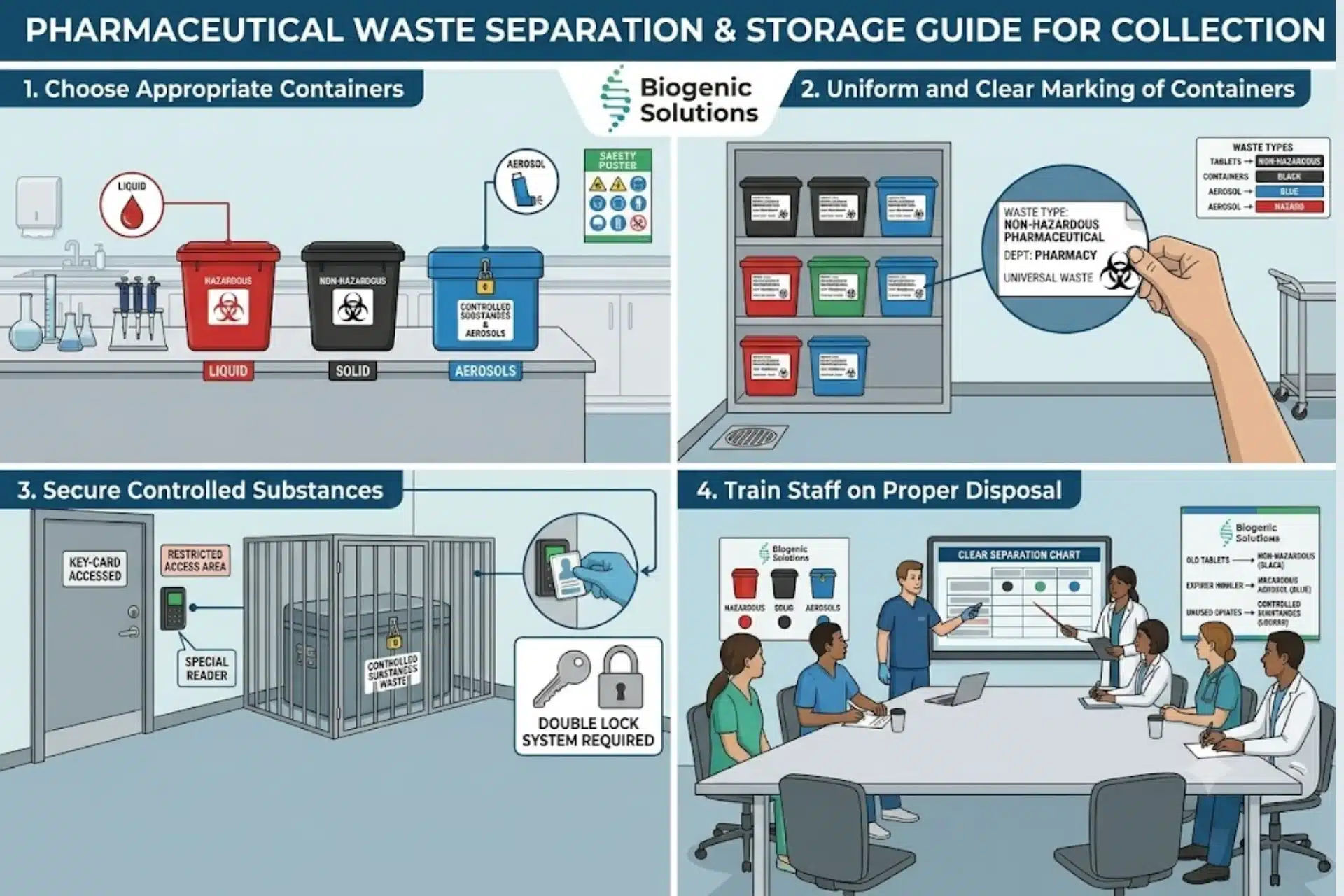
Image Source: Gemini 2026
How to Dispose of Expired and Unused Medications
Disposing of expired and unused medications begins the moment a drug leaves active inventory, and each subsequent step protects your facility from liability.
- Remove any expired or unused drugs from active inventory immediately.
- Place it in the correct, labeled container based on its classification.
- Record the item for pickup, noting the drug, quantity, and classification.
- Work with a licensed provider to document the pickup, transportation, and final destruction.
A few things to avoid: don’t leave expired medications mixed in with active stock, don’t throw them in regular trash, and don’t flush or pour them down a sink or toilet.
Flushed drugs end up in wastewater and eventually in rivers and streams where they threaten aquatic life. Discarded narcotics enter soil and bodies of water. Safe disposal of outdated medicines safeguards public health and the environment.
What Does a Compliant Pickup Process Look Like
A compliant pickup process looks like flexible scheduling, accurate documentation, properly labeled containers, and a clear chain of custody from your facility to final destruction across disposal methods.
At Biogenic Solutions, we build your schedule around your facility’s real volume, not a fixed route.
Every pickup comes with a manifest documenting waste from collection to final disposal. We tag, log, and seal containers at your building, and maintain a chain of custody the whole way to destruction.
Once that’s complete, you have finished documentation on hand for a state inspection or OSHA compliance audit.
Frequently Asked Questions
Pharmaceutical waste is any drug your facility can’t use as prescribed, including expired, unused, partially used, or contaminated drugs. Improper handling can harm staff, patients, and the environment. Sorting waste by category keeps your facility compliant.
No. Federal law requires proper segregation, labeling, and disposal of hazardous pharmaceutical waste using an approved method. Not every drug is dangerous, but unwanted medication can be diverted or abused, which is why most facilities route it through a dedicated program.
The frequency of pickup is determined by your facility’s size and storage capacity. A small pharmacy may need monthly servicing, but busy hospital pharmacies may require weekly pickups. A professional provider can help create a schedule appropriate for your pharmaceutical waste volume.
Penalties vary by violation. The EPA can fine up to $124,426 per day per RCRA violation, and the DEA can fine up to $25,000 per violation and revoke your registration. Beyond cost, a violation also puts your accreditation and community trust at risk.
Key Takeaways
- Classify each drug correctly. Prescription, over-the-counter, controlled, and hazardous pharmaceuticals carry different rules.
- Separate hazardous pharmaceutical waste from regular trash at the point of generation.
- Store waste in labeled containers suited to each waste stream.
- Follow DEA rules for securing and destroying controlled substances.
- Comply with EPA storage, labeling, and disposal requirements.
- Work with a licensed provider who documents every pickup, transport, and final destruction.
Your Compliance Partner in Pharmaceutical Waste Management
A fine or a failed audit is rarely about one bad decision. It’s usually a gap that builds up over time: a mislabeled container, a missed pickup, a record that doesn’t add up. Biogenic Solutions helps practice managers and pharmacists close that gap, with a pharmaceutical waste management program built around your facility’s actual volume and documentation an inspector can trust.
Custom compliance solutions, delivered on time, every time. Contact our team at Biogenic Solutions to keep the disposal of pharmaceuticals at your facility compliant and worry-free.