Stop risking fines and staff injury. Your veterinary sharps disposal demands compliant, state-specific care. Get the definitive Texas and Oklahoma medical waste segregation guide to maximize safety and simplify your clinic’s regulatory compliance.
As a busy practice manager at a veterinary clinic in Dallas-Fort Worth or Oklahoma City, your job is a balancing act: patient care, employee scheduling, and regulatory adherence. When veterinary sharps disposal fails, it creates a liability that can lead to staff injury, hefty fines, and service disruptions.
The rules for animal care are just as strict as those for human healthcare. You need reliable medical waste solutions, not generic service. Animal hospitals and veterinary clinics demand the best disposal method to protect staff and pet owners.
Here’s your simple, state-specific checklist for keeping your clinic safe and ready for any inspection. This guide covers regulated medical waste segregation and the proper handling of sharps.
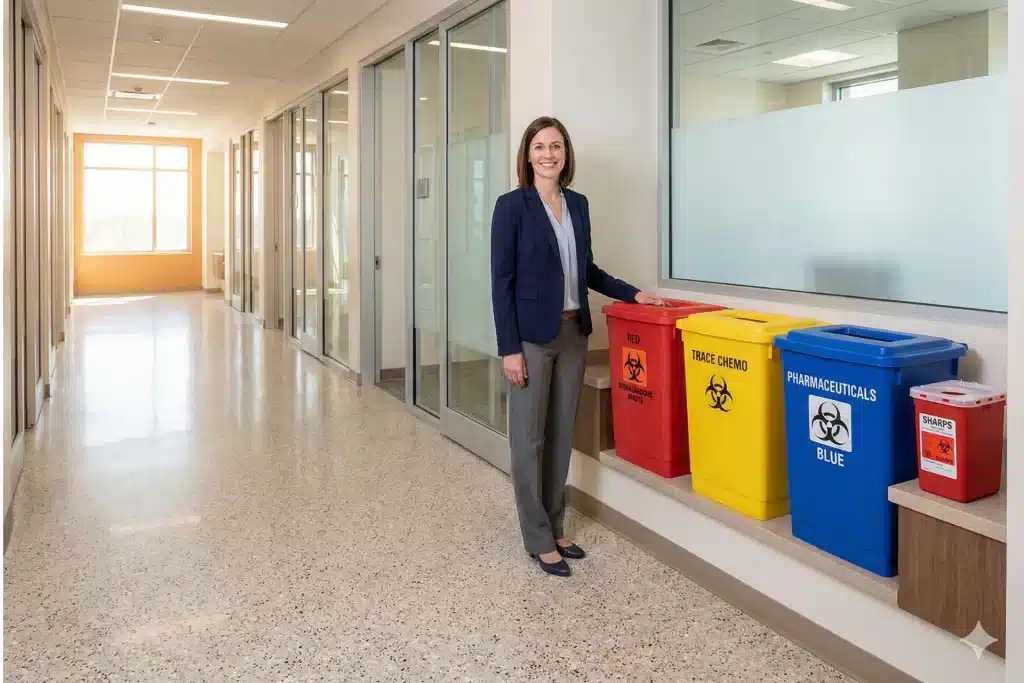
1. Segregation: Know Your Containers
Improper segregation is the number one pitfall in compliance inspections. Sharps must be separated immediately upon generation, as they pose a serious contamination risk.
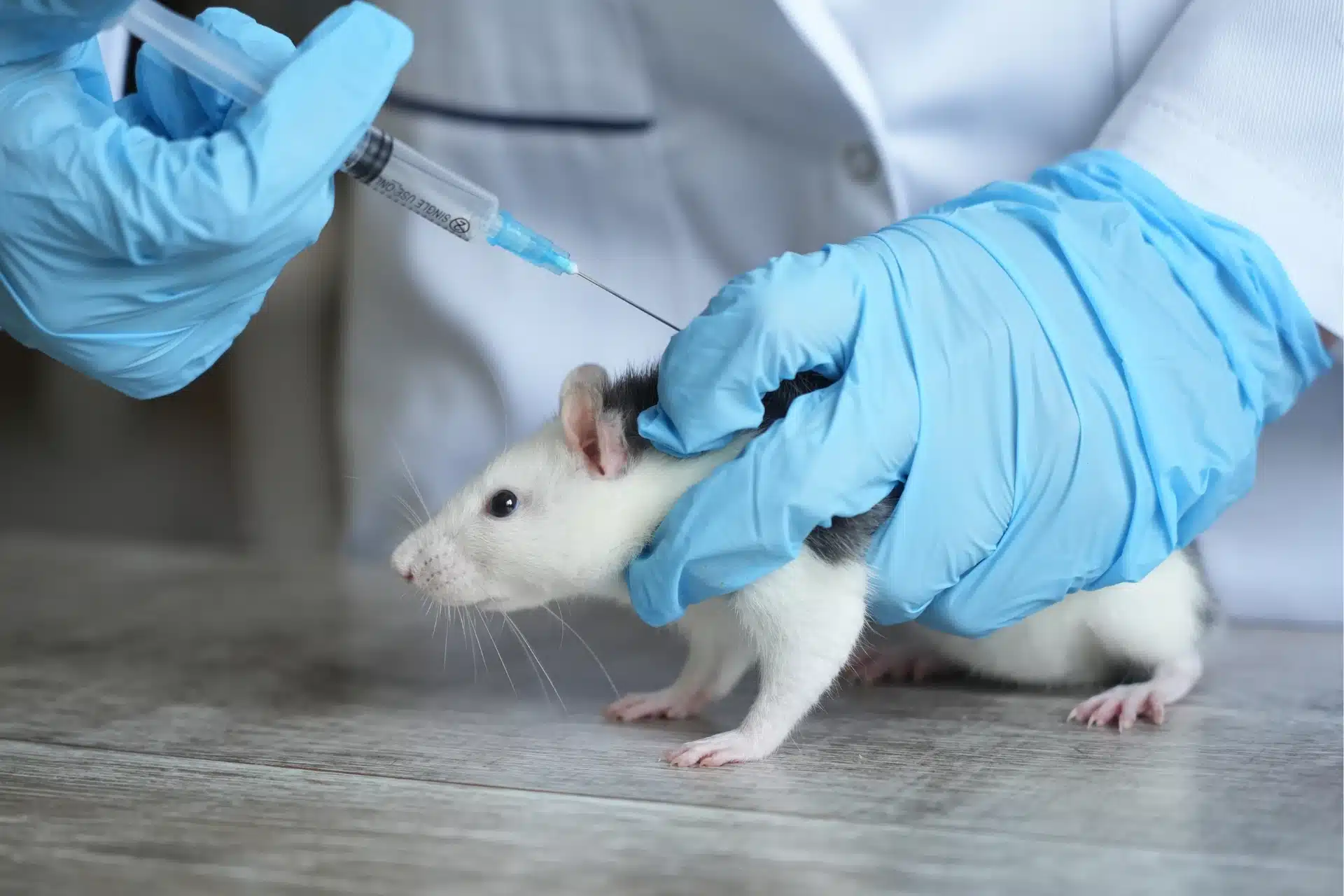
- Puncture-Proof Placement: All used sharps, including needles, syringes with needles attached, scalpels, and broken glass contaminated with infectious material like animal blood, must go directly into designated sharps containers. This is the key to proper disposal.
- The Container Commandments: Your sharps container must be rigid, leak-proof, puncture-resistant, and clearly labeled (or be red).
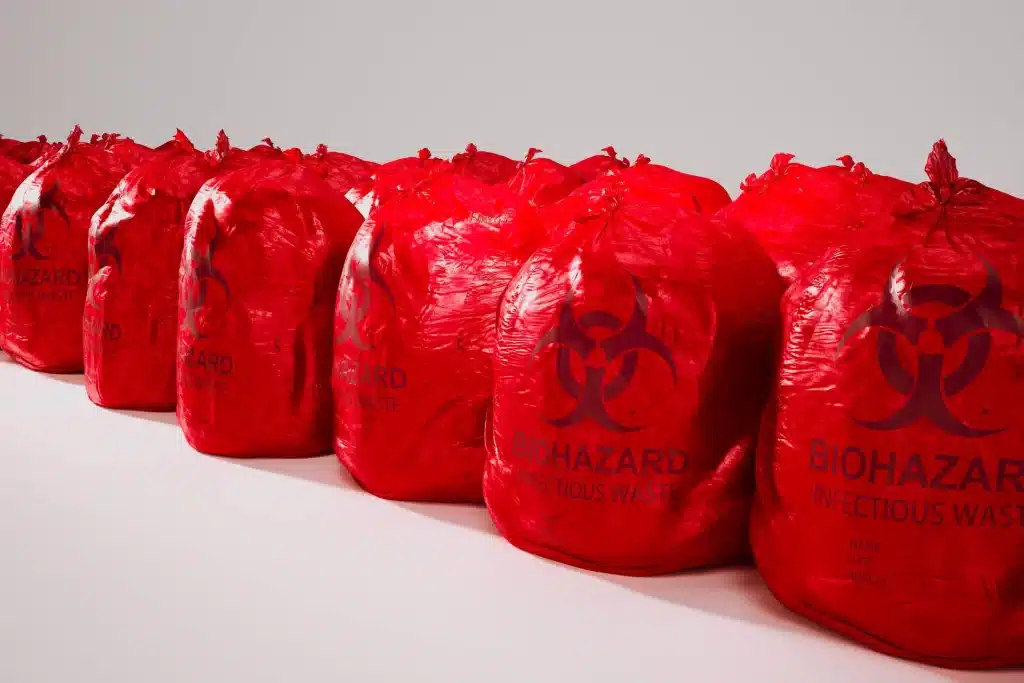
- The Don’t List: Never place syringes or other sharps waste in a red bag waste container, regular garbage, or fill a container past the designated line (typically three-quarters full). Overfilled containers are a frequent OSHA violation and a significant source of injury.
2. Sizing and Staging: Containment Strategy
Choosing the right container size and location is imperative for safety and streamlined operations.
- Point-of-Use: Sharps containers must be within arm’s reach of where injections or incisions take place. This is non-negotiable for preventing needlestick injuries from contaminated sharps.
- Smart Sizing: Opt for wall-mounted units in high-volume areas, using smaller, portable containers at individual stations. Biogenic Solutions helps you select the exact sharps waste container volume your veterinary clinic needs.
- Secure Storage: Accumulated regulated medical waste must be stored securely in a designated, locked, and well-ventilated area.
3. Time: State Storage Limits
In Texas and Oklahoma, accumulation time limits are strictly enforced. Exceeding these limits increases the potential for contamination and regulatory trouble.
- Small Quantity Generators (SQGs): Most veterinary clinics and animal hospitals generate 50 lbs or less of monthly waste, placing them in this category. In Texas, waste can be stored for up to 90 days. For practices in the Dallas-Fort Worth area, this 90-day maximum is the safest compliance threshold.
- The Pickup Pulse: Instead of pushing the storage limit, a reliable, scheduled pickup cadence ensures your sharps waste and other materials are removed well within the state limits. High-volume facilities may need bi-weekly or even weekly pickups.

Image Source: Shutterstock
4. Training: Staff Preparation
Inadequate staff education is a leading cause of costly mistakes. Every employee must know the proper procedures.
- OSHA Compliance: All staff handling regulated medical waste must receive annual training on proper disposal, sharps waste container use, and procedures.
- Training Touchpoints for Vet Staff:
- Restraint Techniques: Train staff on safely restraining animals like dogs and cats to minimize unexpected movements that lead to injuries from used needles.
- Segregation Drills: Regular audits ensure staff know the difference between general trash, red bag materials, and where to place sharps, as well as how to properly dispose of all medical waste.
- Documentation Deep Dive: All employees must understand the importance of waste manifests and compliance labels for audit readiness.
Learn more: Why Effective Medical Waste Solutions Matter in Healthcare Facilities
FAQs about Veterinary Sharps Disposal
Texas Small Quantity Generators (SQGs) have a 90-day maximum limit to store regulated waste on site. Relying on reliable, scheduled collection well before this threshold is the easiest way to remain compliant and avoid liability.
Any object that can puncture or cut skin must go in. This includes syringes with attached needles, contaminated broken glass, pasteur pipettes, and dental wires. Immediate placement into the puncture-resistant container is key to staff safety.
The main risk is major OSHA fines, sometimes reaching tens of thousands of dollars. Top mistakes include poor staff training, overfilling sharps containers, failing to separate red bag waste from general trash, and not having containers at the point of use.
Training needs to focus on segregation drills (trash vs. sharps vs. biohazard), safe animal restraint techniques to prevent incidents, and proficiency in all disposal procedures, including proper PPE usage and documentation.
Key Takeaways
- Puncture-Proof Segregation: Place all used sharps (needles, scalpels) immediately into rigid, labeled sharps containers. Never use plain biohazard or regular trash bags.
- Point-of-Use Placement: Keep sharps waste containers within arm’s reach at the point of care to prevent injuries.
- Texas 90-Day Clock: SQG clinics in Texas must dispose of sharps well before the 90-day storage limit (scheduled, reliable pickups are recommended).
- Mandatory OSHA Training: Annual staff training on proper sharps handling, container use, and medical waste segregation to avoid costly errors.
- Compliance Saves Cash: Following state-specific rules for veterinary sharps disposal prevents fines and service disruption.
Partnership Over Pitfalls
Dealing with federal and state regulations shouldn’t be a source of stress.
As a compliance partner, Biogenic Solutions delivers personalized, local services in the DFW and OKC areas, ensuring on-time pickups for your veterinary medicine clinic or animal hospital every time. We provide the reliable, safe, and cost-effective waste management your practice, animals, and pet owners deserve.
Ready to banish compliance stress and learn more about our contaminated sharps disposal service? Contact us to get transparent, volume-based pricing today.