Regulated medical waste disposal requires strict segregation into streams like sharps and infectious waste. Major methods include autoclaving and incineration, all overseen by the Environmental Protection Agency and the health administration.
As a practice manager in a demanding clinical environment, you’re aware of the high stakes that come with managing regulated medical waste (RMW). It’s a non-negotiable compliance and occupational safety concern, not just simply another chore.
Mistakes lead to fines, human health hazards, and operational headaches. Biogenic Solutions understands this. That’s why a transparent, reliable approach to medical waste management is necessary.
Forget generic 1-800 service. We’ll break down the most common regulated medical waste disposal and treatment methods, exploring the pros, cons, and use cases to help your health care facilities maintain compliance and reduce costs.
What is Regulated Medical Waste (RMW)?
RMW, sometimes called biomedical, infectious waste, biohazardous, or infectious medical waste, is any waste potentially contaminated with blood, body fluids, or other potentially infectious materials (OPIM) that could spread infection.
This is not just ordinary solid waste. This specific type of medical waste requires special handling, segregation, treatment, and disposal to neutralize disease-causing organisms and infectious agents. The high disease-causing potential of regulated medical materials demands rigorous management to protect healthcare workers and the general public from the risk of transmitting infection.
Common categories of regulated medical waste include:
- Contaminated Sharps: Needles, syringes, scalpel blades, and broken glass.
- Pathological Waste: Tissues, organs, and body fluids removed during surgery.
- Microbiological Wastes: Cultures and stocks of infectious agents.
- Bulk Human Blood and Body Fluids: Liquid blood, serum, and plasma.
Any waste that is typically ordinary solid waste, chemical waste, or radiological waste cannot be disposed of as regulated medical waste. These streams must be strictly separated.
The Major Medical Waste Treatment Technologies
Choosing the right medical waste treatment technologies is essential for cost-effective and compliant disposal.
1. Thermal Treatment: Autoclaving (Steam Sterilization)
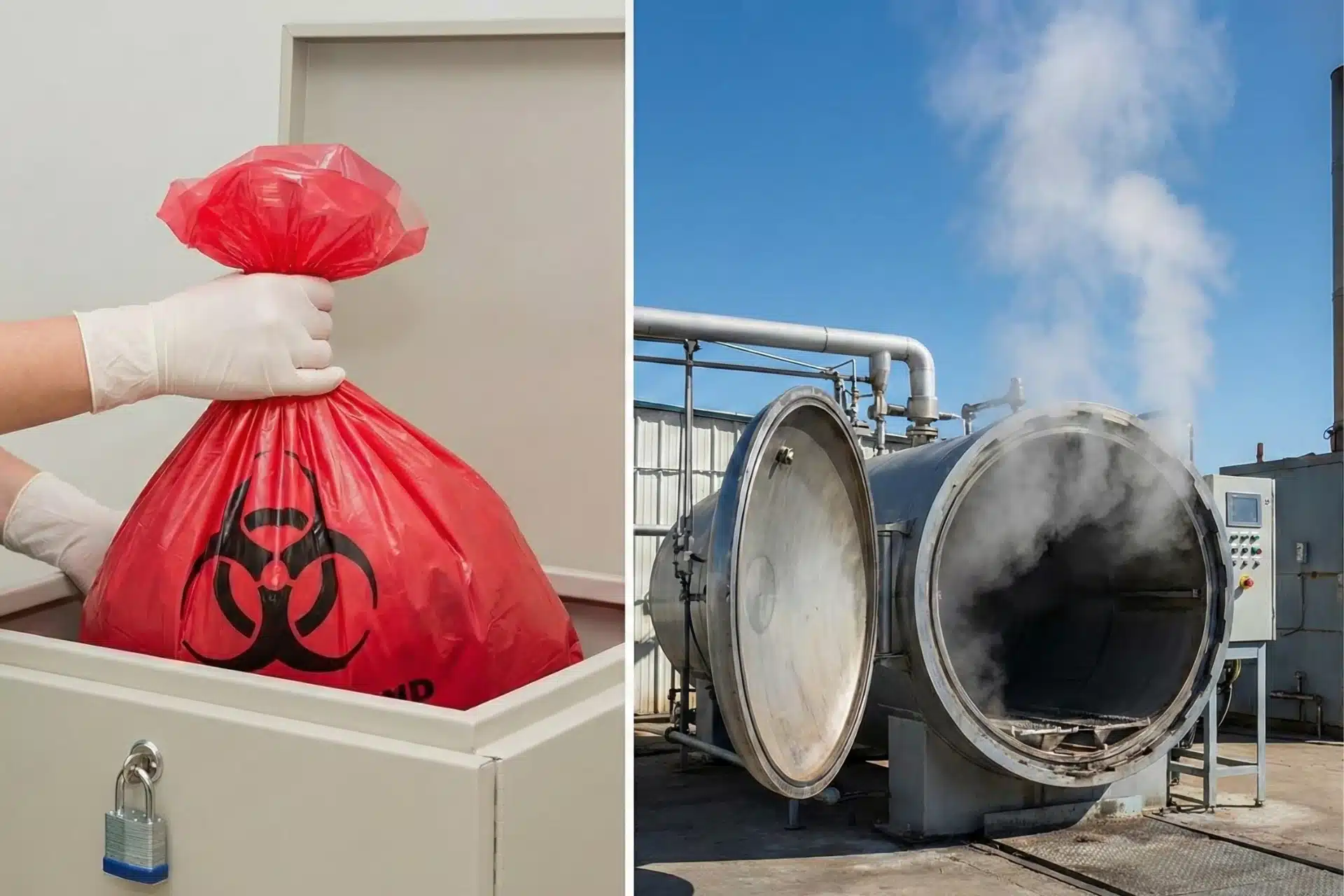
Autoclaving uses high-pressure steam and heat inside a closed chamber to effectively sterilize the waste, killing infectious agents. This method is a crucial step in regulated medical waste management before final disposal.
|
Pros |
Cons |
Use Cases |
| Highly effective for destroying most microorganisms and biological agents. | Cannot treat all waste types, such as anatomical or chemotherapy waste. | General infectious waste (e.g. contaminated materials, tubing, personal protective equipment). |
| Relatively Green compared to incineration, with fewer air quality concerns. | Residual waste still requires sanitary landfill disposal. | Research laboratories and health care facilities processing microbiological wastes. |
This method is the workhorse of decontamination for clinics, physicians’ offices, dental offices, blood banks, and hospitals managing large volumes of daily infectious waste. The resulting properly treated material can then be safely hauled as non-infectious solid waste.
2. High-Heat Destruction: Incineration
Incineration is the process of burning medical waste at extremely high temperatures in a controlled environment. While highly effective, the Environmental Protection Agency (EPA) and state regulations have significantly restricted its use due to concerns about air quality.
Incineration is required for certain regulated medical materials in most states. It is vital for pathological waste (human organs, tissues), trace chemotherapy waste, and highly hazardous biological agents that pose a high risk and cannot be treated by other means.
3. Alternative & Chemical Disinfection
Alternative non-burn medical waste treatment technologies are increasingly common.
- Microwave Systems (Irradiation): This uses heat generated by microwaves to decontaminate waste. It’s a thermal option often used for infectious waste and contaminated sharps.
- Chemical Disinfection: This involves mixing waste with chemical disinfectants to neutralize pathogens. The treatment must be highly controlled to ensure no disease-causing organisms survive. This is generally limited to liquid or chemical lab waste generated in research laboratories.
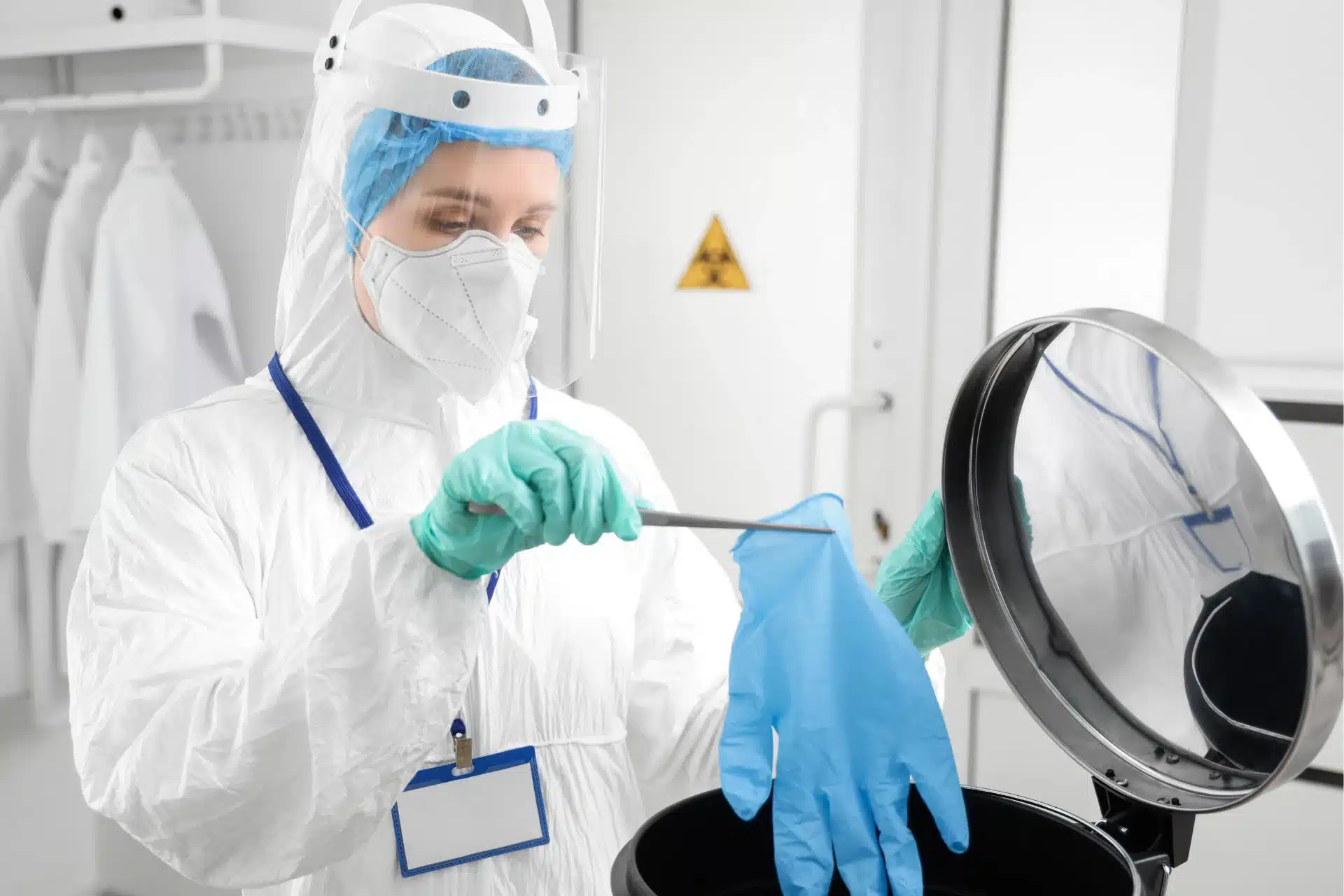
Image Source: Shutterstock
Segregation Success: The RMW Red Bag Rules
Proper segregation is vital for cost control and ensuring infection control. You don’t want to pay high RMW disposal rates for ordinary solid waste.
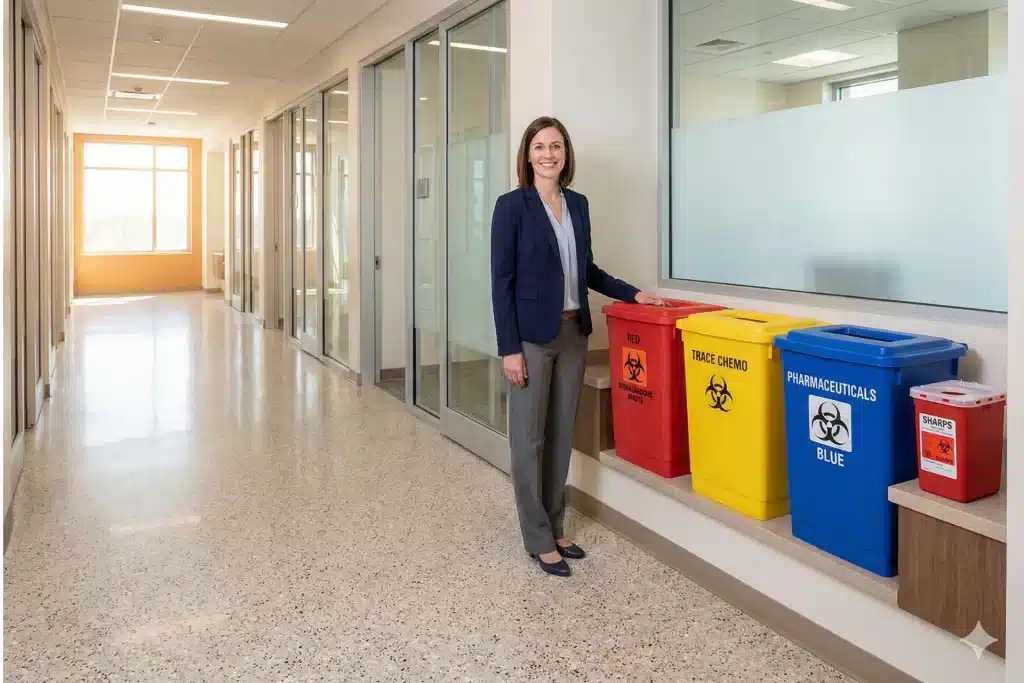
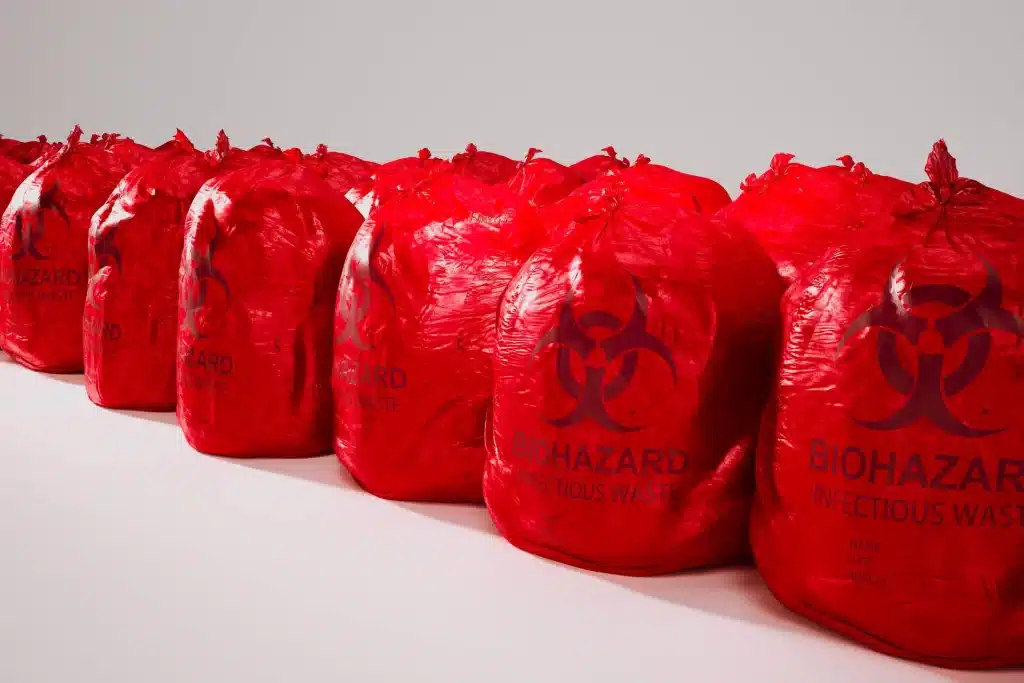
The management of regulated medical waste begins at the point of origin. Healthcare workers must clearly distinguish RMW from general solid waste using a specific color-coding system: the red bag.
Key Segregation Rules:
- Avoid Over-Bagging: Do not place solid waste (like office trash that belongs in the regular stream) in RMW containers. Placing non-RMW into a red bag unnecessarily increases your costs.
- Container Integrity: All regulated medical materials must be placed in leak-proof containers that are then securely closed. Sharps containers for needles must be puncture-resistant containers.
- Pathological Waste: Specific items like pathological waste often require separate containers or specialized processing.
Properly segregated regulated medical waste is then transported off-site by a licensed carrier to an approved treatment facility for treatment and disposal.
The Regulatory Roadmap: Who Oversees Your RMW?
Navigating federal and state regulations is the most complex facet of regulated medical waste management. Your health care facilities must comply with multiple federal agencies and specific state requirements.
Key Oversight Bodies:
- Occupational Safety and Health Administration (OSHA): Protects healthcare workers from exposure to regulated medical waste. OSHA focuses on occupational safety and health administration protocols.
- Environmental Protection Agency (EPA): Oversees the treatment and final disposal of regulated medical waste. The EPA concluded that proper medical waste treatment technologies are essential for environmental protection goals and reducing threats to human health.
- State Health Departments: Most states establish their own programs, which often impose stricter requirements than federal agencies. These state regulations specify how medical waste must be collected, stored, and transported off-site to a licensed treatment facility.
This dynamic regulatory environment makes local expertise a major benefit for physicians’ offices, dental offices, and research laboratories alike.
FAQs About Regulated Medical Waste
General trash refers to solid waste, whereas regulated medical waste is potentially contaminated with blood or other body fluids. RMW requires special segregation, treatment, and disposal to neutralize disease-causing organisms.
Multiple agencies oversee RMW: OSHA focuses on occupational safety for healthcare workers, while the Environmental Protection Agency (EPA) and state departments regulate treatment and final disposal.
No, autoclaving (steam sterilization) is suitable for most general infectious waste. Incineration is usually reserved for pathological waste, trace chemotherapy waste, and highly hazardous biological agents.
Implement the red bag system. Use puncture-resistant containers for sharps and clearly instruct healthcare workers to place only truly contaminated items, not general solid waste, into the RMW stream.
Key Takeaways
- RMW Defined: Regulated medical waste includes materials contaminated with blood, body fluids, or potentially infectious materials, requiring specialized handling beyond normal solid waste.
- Segregation is Key: Using a proper red bag system for infectious waste saves money by avoiding expensive RMW disposal fees for general trash.
- Primary Treatment: Autoclaving (steam sterilization) is the most common and effective treatment method for general infectious waste streams.
- The Incineration Exception: High-heat destruction is still necessary for certain materials, primarily pathological waste and trace chemotherapy waste.
- Regulatory Burden: Oversight is complex, involving federal bodies like the EPA and OSHA, plus varying state regulations.
- Partner Locally: Choosing a flexible, local provider simplifies compliance and minimizes risk associated with large, generic national carriers.
Your Compliance Confidence Starts with Smart Partnerships
Every medical waste management method has trade-offs, and choosing the right combination requires a deep understanding of your waste streams, volume, and local rules. You deserve a partner that offers customized, compliant, and personalized regulated medical waste management.
Biogenic Solutions is your compliance partner, delivering safe, reliable, and cost-effective medical waste management tailored directly to your facility’s needs.
We eliminate the common headaches, such as missed pickups, surprise billing, and confusing compliance rules, so you can focus on patient care.
We’re Biogenic Solutions, providing fixes that go beyond a cardboard box.